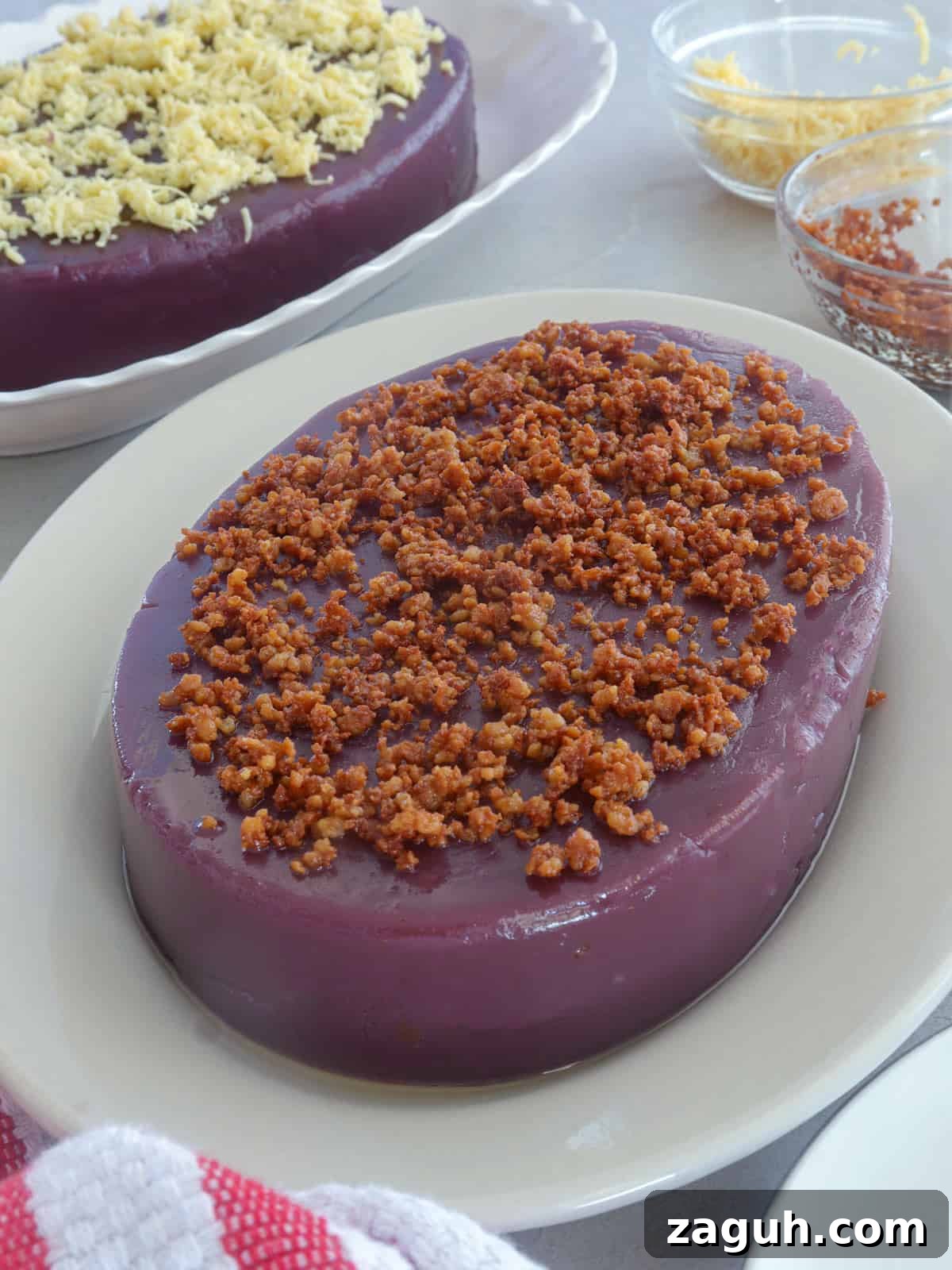
Halayang Ube, or Ube Halaya, is a beloved Filipino delicacy made from purple yam, coconut milk, and butter. Lusciously creamy and often enriched with cheese and topped with golden latik, it makes a satisfying snack or dessert that highlights the unique flavor and color of ube.
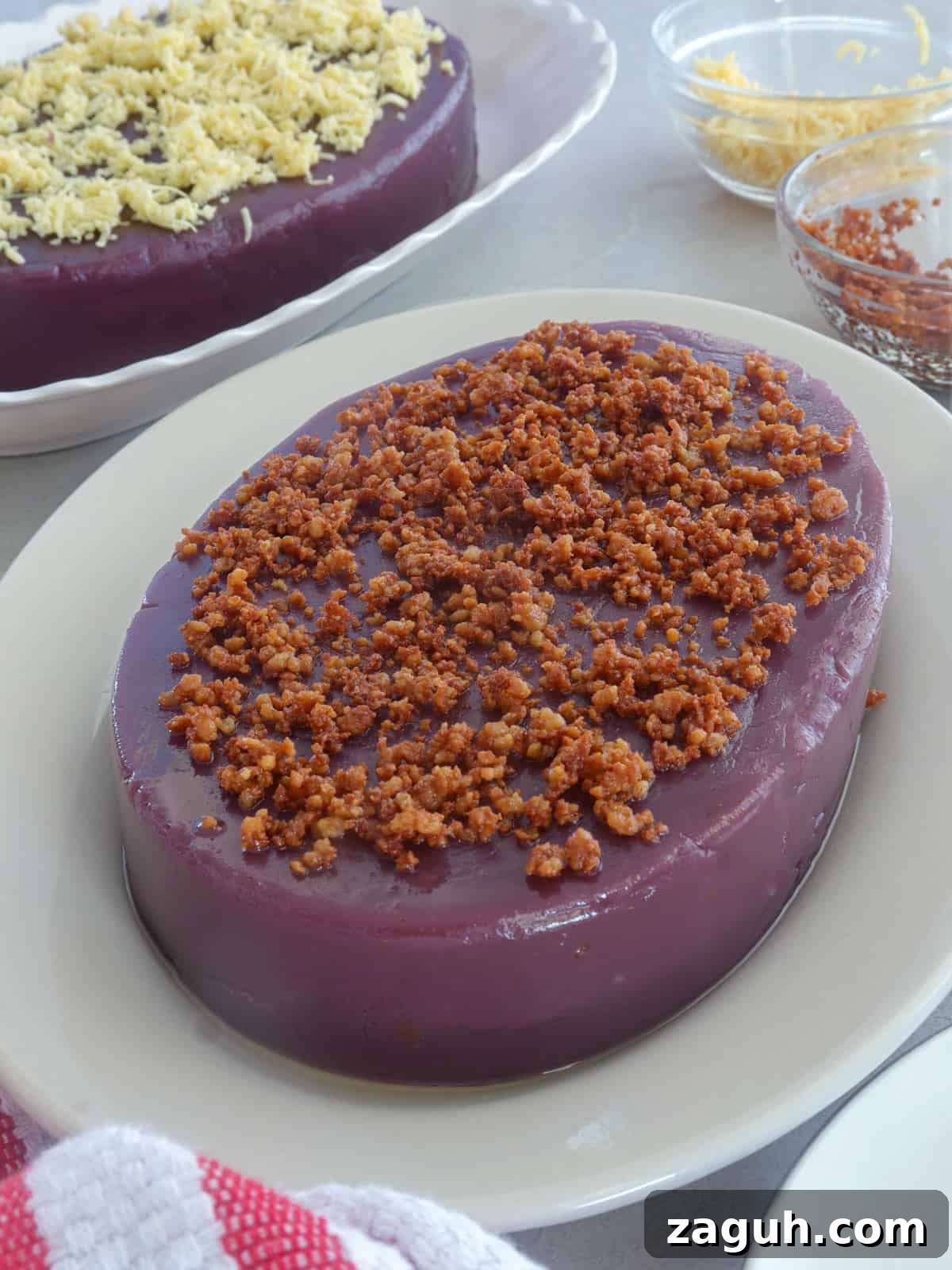
Recently I found frozen grated purple yam on sale and stocked up. Using the grated ube made preparing several ube desserts quick and consistent. I re-shot a few recipes and spent the day cooking ube kalamay, ube maja, and this halaya. They were so good I snacked on them all day—worth every spoonful.
What is Ube Halaya
Ube Halaya is a Filipino jam or pudding made primarily from purple yam (ube). It is typically enjoyed as an afternoon snack or after-meal dessert and also serves as an ingredient in many other Filipino treats: breads, ube crinkle cookies, ube mamon sponge cakes, peanut tikoy rolls, halo-halo, and ube macapuno ice cream, among others.
Ingredient notes
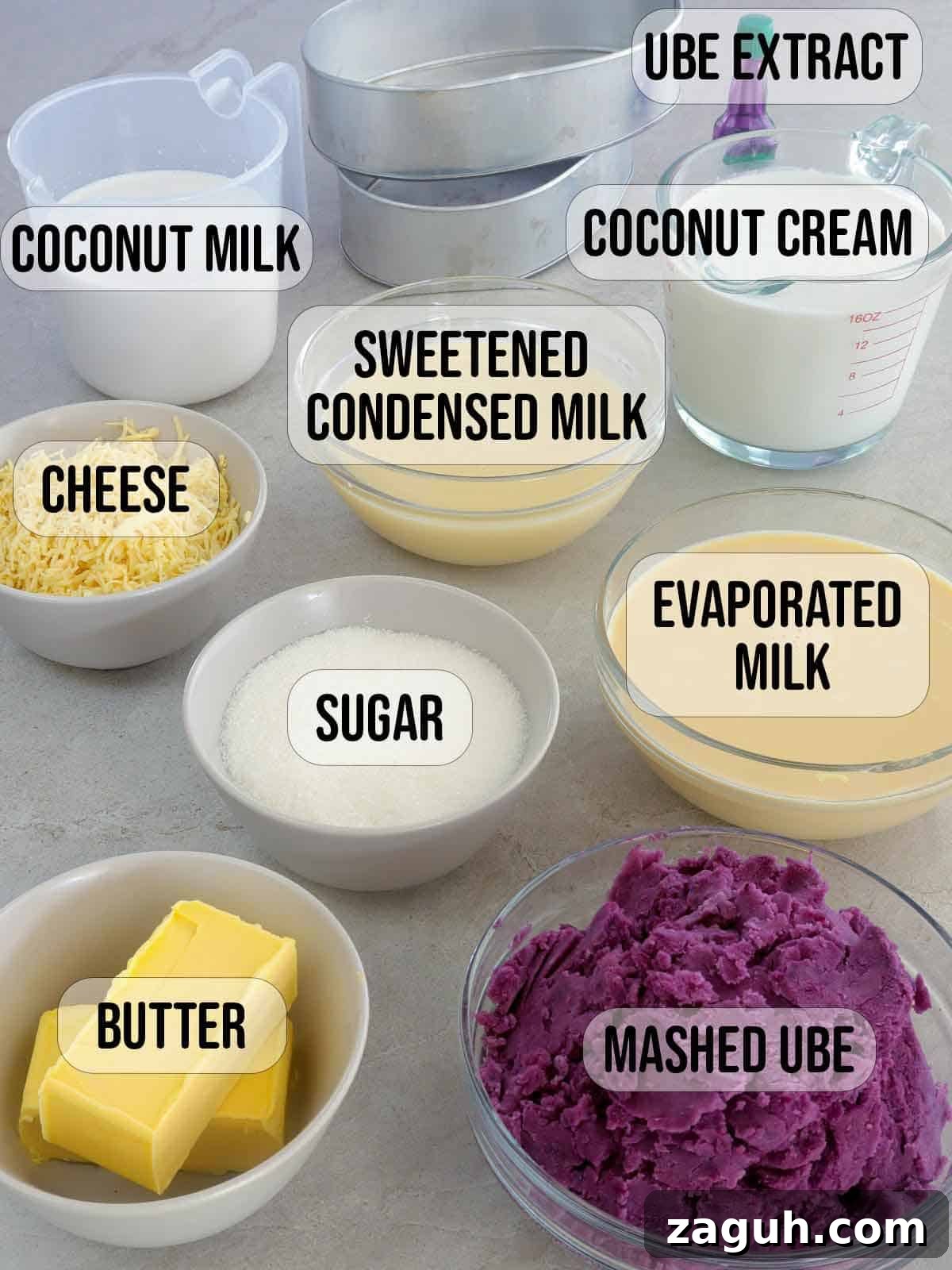
- Purple yam (ube) – Traditionally, whole yams are boiled or steamed until tender, then mashed until very smooth. For convenience, frozen grated ube is widely available and works well, saving time while still producing authentic flavor.
- Milk, butter, and sugar – A combination of coconut milk, evaporated milk, sweetened condensed milk, butter, and sugar is cooked with the mashed ube until the mixture becomes thick and creamy.
- Cheese – Processed American-style cheese (brands like Eden or Magnolia) is commonly added. It melts into the halaya, adding creaminess and helping the mixture thicken more quickly.
- Ube extract – Optional. A few drops can enhance color, aroma, and flavor. Use sparingly; the cooked color will deepen during the process.
How to Make Ube Halaya
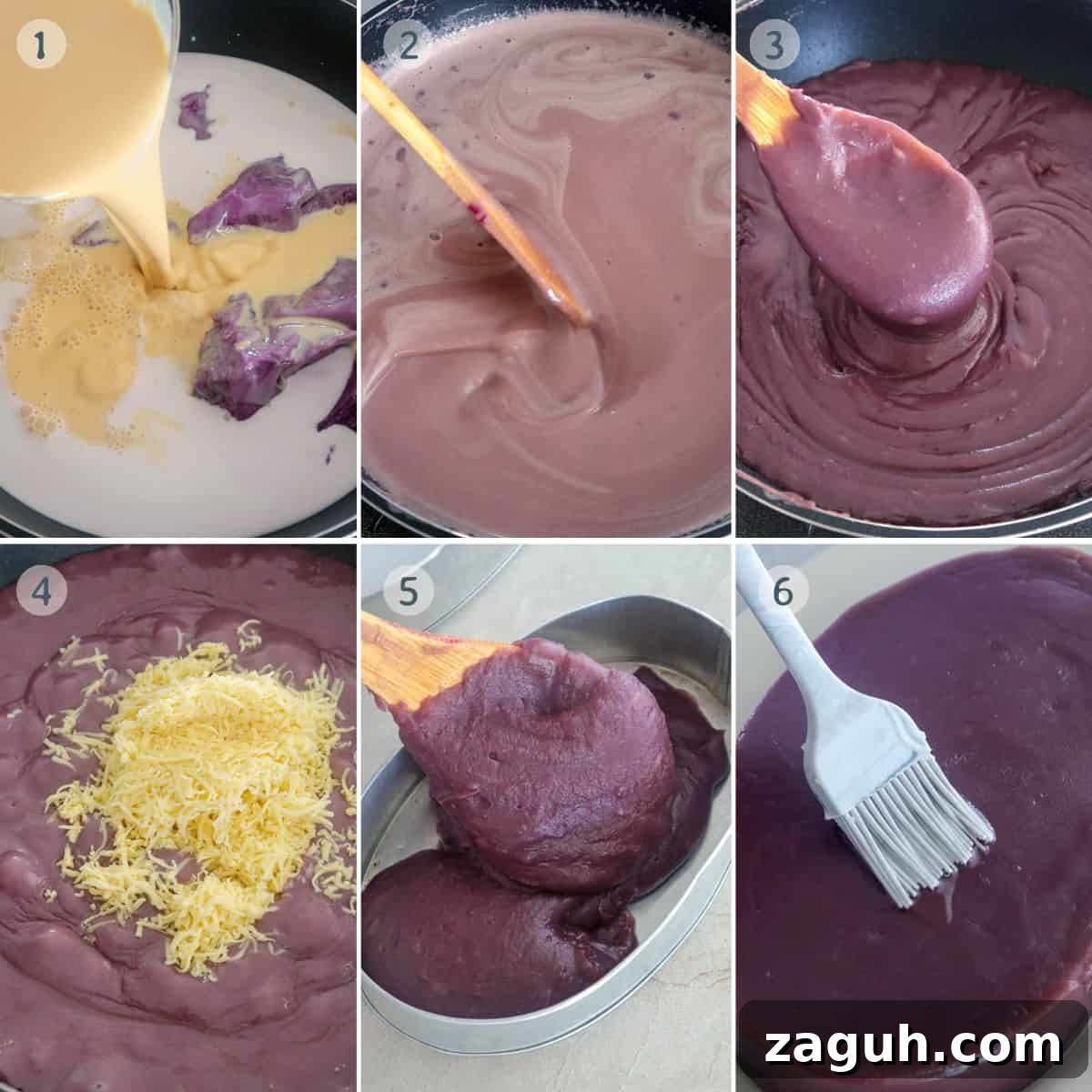
The method is straightforward but requires patience and frequent stirring so the halaya doesn’t stick or burn. You can make latik (the toasted coconut curds) while the ube cooks; the rendered coconut oil from latik is useful for greasing the finished halaya.
- Combine grated ube, coconut milk, condensed milk, evaporated milk, butter, and sugar in a wide, heavy-bottomed pan. Whisk until smooth.
- Bring the mixture to a gentle boil, stirring occasionally until the sugar dissolves, the butter melts, and the ube evenly disperses. Add ube extract if using and stir until color is consistent.
- Reduce heat and simmer, stirring frequently, until the mixture thickens to a paste-like consistency (this usually takes 30–40 minutes).
- Stir in the cheese and cook another 10–15 minutes, until the halaya clings to the back of a spoon and begins to pull away from the sides of the pan.
- Grease the sides of a baking dish or llanera mold lightly with coconut oil or melted butter. Spoon the halaya into the prepared mold and smooth the surface with a greased spatula. Let cool completely.
- To serve, invert the halaya onto a plate, brush the top lightly with coconut oil, and garnish with latik, shredded cheese, toasted coconut flakes, or sweetened macapuno strings.
Quick tip
You can cook the ube jam to a spreadable consistency to jar and store, or continue cooking until firm enough to mold. The halaya will also continue to thicken as it cools, so remove it from heat when it reaches a slightly softer stage than the final texture you want.
Serving suggestions
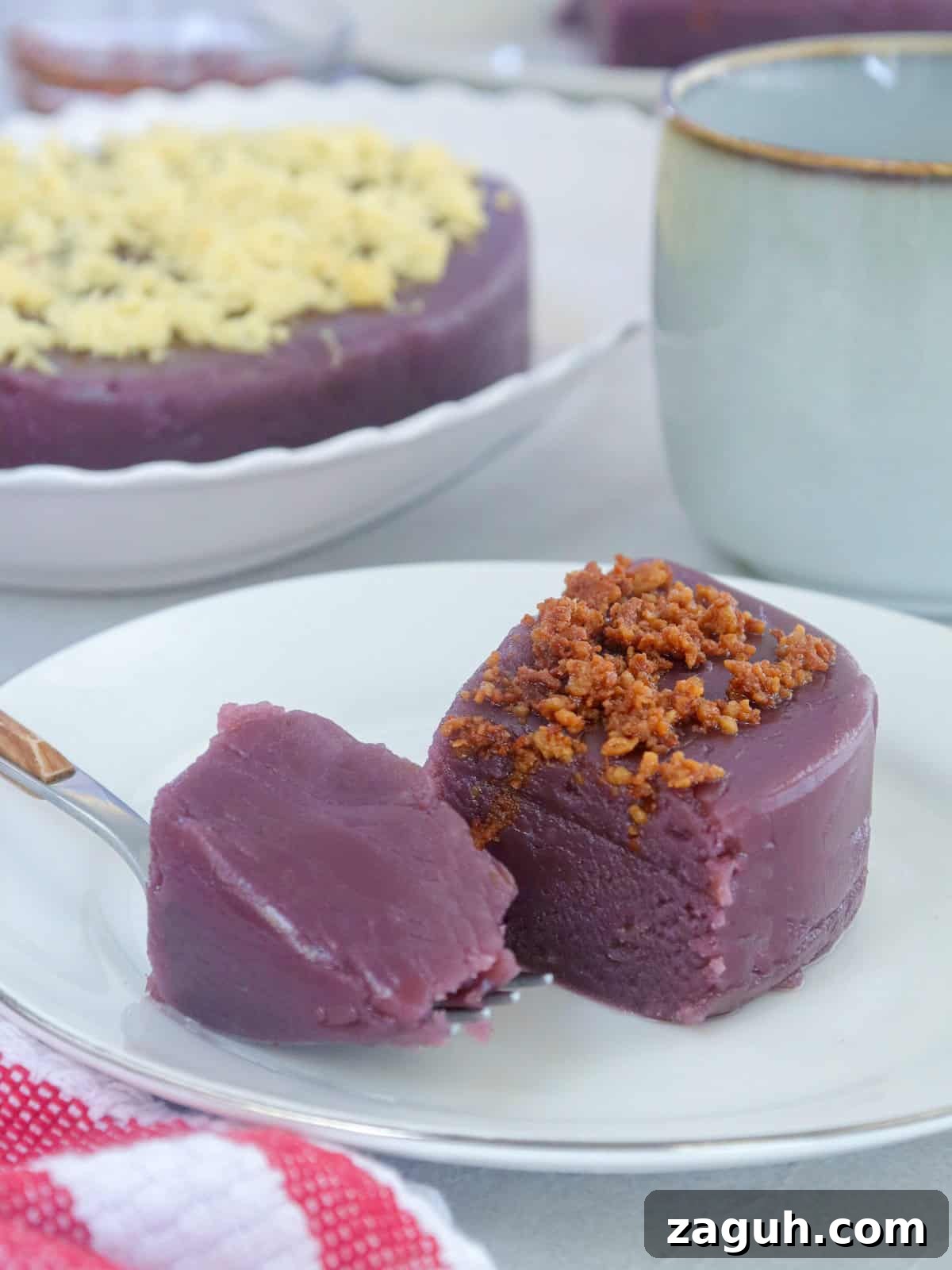
Halayang Ube is rich and satisfying on its own, but toppings add texture and contrast. Popular options include golden latik, shredded cheese, toasted coconut flakes, or sweetened macapuno. Serve it as part of a dessert spread, as a filling for pastries, or simply enjoy a small slice with coffee or tea.
This dessert is ideal for parties or a special homemade treat—its bold color and comforting flavor always attract attention.
How Long Does Ube Halaya Last
When stored in an airtight container, halayang ube will keep in the refrigerator for up to 3 days. For longer storage, freeze it for up to one month. Wrap tightly or use airtight containers to prevent drying and preserve texture. If you plan to can or jar for extended shelf life, follow safe canning guidelines from trusted food-safety resources.
More dessert recipes
Bibingkang Malagkit
Bibingkoy
Pichi-Pichi
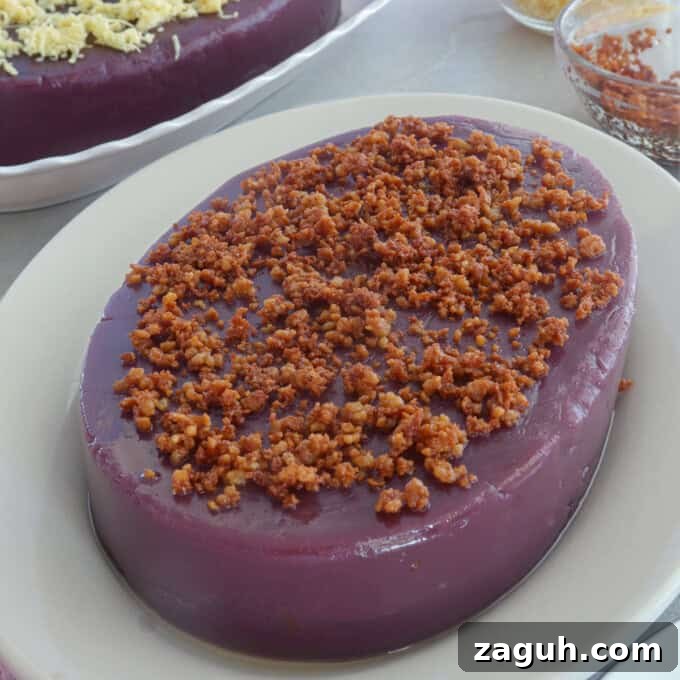
Halayang Ube
Ingredients
- 1 package (16 ounces) frozen grated ube, thawed
- 1 can (13.5 ounces) coconut milk
- 1 can (14 ounces) sweetened condensed milk
- 1 can (12 ounces) evaporated milk
- ½ cup butter
- 1 cup sugar
- 2 to 3 drops ube extract (optional)
- 1 cup American processed cheese, shredded
For the Latik
- 2 cups coconut cream
Instructions
-
In a wide, heavy-bottomed pan over medium heat, combine grated ube, coconut milk, condensed milk, evaporated milk, butter, and sugar.
-
Bring to a boil, stirring occasionally until sugar is dissolved, butter is melted, and ube is dispersed.
-
Add ube extract if using and stir until mixture is evenly colored.
-
Lower heat and continue to cook, stirring regularly, for about 30 to 40 minutes or until a thick paste consistency forms.
-
Add cheese and stir until melted. Continue to cook for another 10 to 15 minutes or until mixture is thick enough to cling to the back of the spoon and pulls slightly from the side of the pan.
-
Lightly grease sides of a baking dish or llanera mold with coconut oil or melted butter.
-
Spoon ube halaya into the prepared dish or mold and using a buttered spatula, spread and flatten evenly. Allow to cool.
-
To serve, invert halaya onto a serving plate. Lightly brush the top with coconut oil and garnish with latik, shredded cheese, toasted coconut flakes, or sweetened macapuno.
To Make Latik
-
In a pan over medium heat, add coconut cream and bring to a boil. Cook until it starts to thicken.
-
Lower heat and continue to cook. As the oil separates and solids form, stir and scrape the sides and bottom of the pan to prevent burning.
-
Keep cooking and stirring until the curds turn golden brown. Drain latik from the oil and store curds separately until ready to use.