Thanksgiving approaches, and with it the annual surge in turkey purchases—about 46 million turkeys are eaten each Thanksgiving in the United States. With so many options and labels on supermarket shelves, it can be confusing to know which turkeys represent better animal welfare and higher food quality. Below is a clear, SEO-friendly guide to common turkey labels and what they actually mean, so you can make an informed choice for your holiday meal.
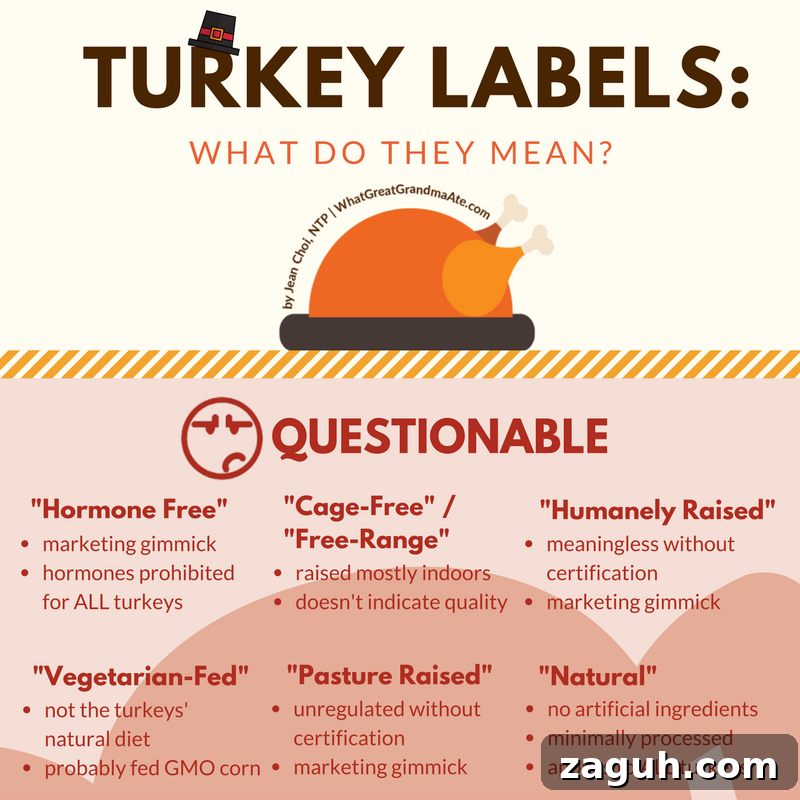
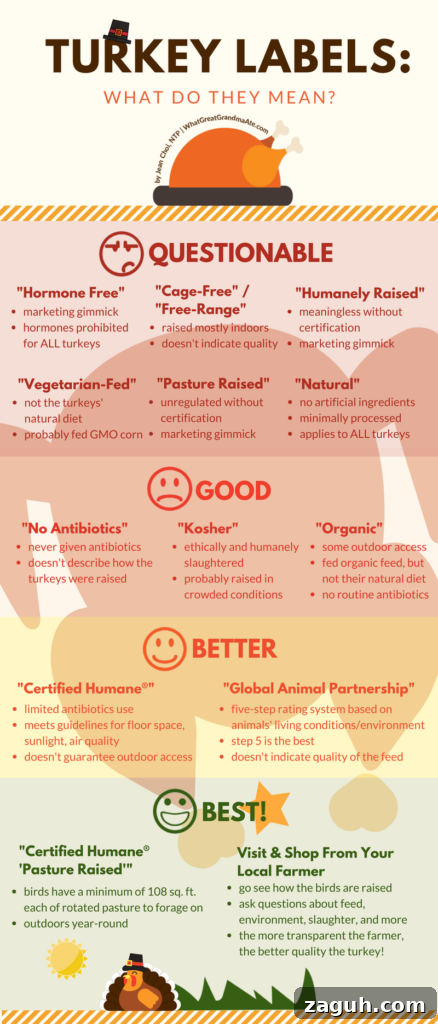
QUESTIONABLE
Hormone Free: This claim is misleading because the use of hormones in all poultry is already banned in the United States. In other words, all legally sold turkeys should be hormone free, so the label offers no real information—it’s simply a marketing tactic.
Cage-Free / Free-Range: These terms only indicate that the birds were not kept in cages, but they don’t guarantee meaningful outdoor access or humane living conditions. Regulations allow minimal outdoor access—sometimes as little as a few minutes—so a “free-range” label can still reflect crowded or confined settings. These terms also don’t describe the animals’ diet or overall welfare.
Humanely Raised: Unless backed by a recognized certification, “humanely raised” is unregulated and primarily a marketing phrase. Without a certifying organization, this label offers little reliable information about actual living conditions or treatment.
Vegetarian-Fed: Wild turkeys are omnivores that forage insects, worms, seeds, and small animals. Labeling a turkey “vegetarian-fed” typically means it was given a grain-based diet, which is not its natural diet and may include GMO corn or other grains. This label does not necessarily imply better welfare or nutrition.
Pasture-Raised: On its own, “pasture-raised” can be misleading if not paired with a trusted certification. The term is not uniformly regulated, so some birds labeled this way may still come from intensive operations with subpar feed and limited outdoor access.
Natural: “Natural” is a broad, largely unregulated term used to imply wholesomeness. It carries no standardized meaning when applied to meats, so it shouldn’t be relied upon as an indicator of quality, animal welfare, or farming practices.
GOOD
No Antibiotics: Labels such as “No Antibiotics” or “No Antibiotics Used” mean the birds were not routinely given antibiotics. This is helpful for reducing antibiotic exposure, which can affect human gut health and contribute to antibiotic resistance. However, it does not necessarily reflect housing conditions, outdoor access, or the quality of feed—animals in poor environments may still become ill and require treatment.
Kosher: A kosher designation refers to slaughter practices that follow Jewish dietary laws, which aim to minimize suffering during the killing process. While kosher slaughter can be more humane at the point of slaughter, the label does not speak to how the animals were raised or their living conditions throughout life; many kosher birds may still have been raised in crowded facilities.
Organic: Organic certification for poultry means birds were fed organic feed, were given some outdoor access, and were not routinely treated with antibiotics. This is a meaningful improvement over many generic claims because it sets standards for feed and antibiotic use. Still, organic feed is often grain-based and not fully representative of a turkey’s natural omnivorous diet that includes insects, seeds, and small animals.
BETTER
Certified Humane: This certification, issued by Humane Farm Animal Care, sets specific standards for housing, air and light quality, floor space, and opportunities for natural behaviors like foraging and exploration. Certified Humane birds cannot be caged and are raised without routine antibiotics or growth promoters. While the standards are a notable improvement, some consumers feel the feed quality requirements could be stricter.
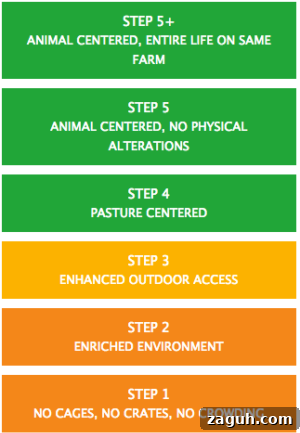
Global Animal Partnership: The Global Animal Partnership (GAP) offers a numbered, multi-step welfare program commonly seen at retailers like Whole Foods. Step 1 indicates basic improvements such as no cages or crowding, while higher steps represent progressively better outdoor access and more natural living conditions. Step 5+ means birds live continuously on pasture and are only sheltered in extreme weather. For a balance of availability and welfare, look for GAP Step 3–5 turkeys.
BEST!
Certified Humane “Pasture Raised”: This is one of the strongest labels for turkey welfare. Under this Certified Humane pasture-raised standard, birds are guaranteed at least 108 square feet per bird, with pasture rotation and year-round outdoor access except during very severe weather. Housing may be mobile or fixed, allowing the birds to shelter safely at night. These standards promote natural foraging behavior and greater activity, producing healthier, more naturally raised birds.
Visit and Shop From Your Local Farmer: Buying directly from a local farmer and visiting the farm is often the best way to ensure the turkey you purchase was raised in the conditions you value. A reputable farmer will welcome questions and farm visits. If a farmer resists visits or is evasive about practices, consider that a warning sign. Keep in mind that pasture-raised, well-managed birds are often more expensive and may require advance ordering, but they typically offer the highest welfare and quality.
Finally, while the origin and quality of the turkey you serve are important, don’t let label confusion or budget constraints turn Thanksgiving into a source of stress. Stress itself affects health, so focus on gratitude and time with loved ones, and do the best you can within your means to choose a turkey that fits your values and budget.