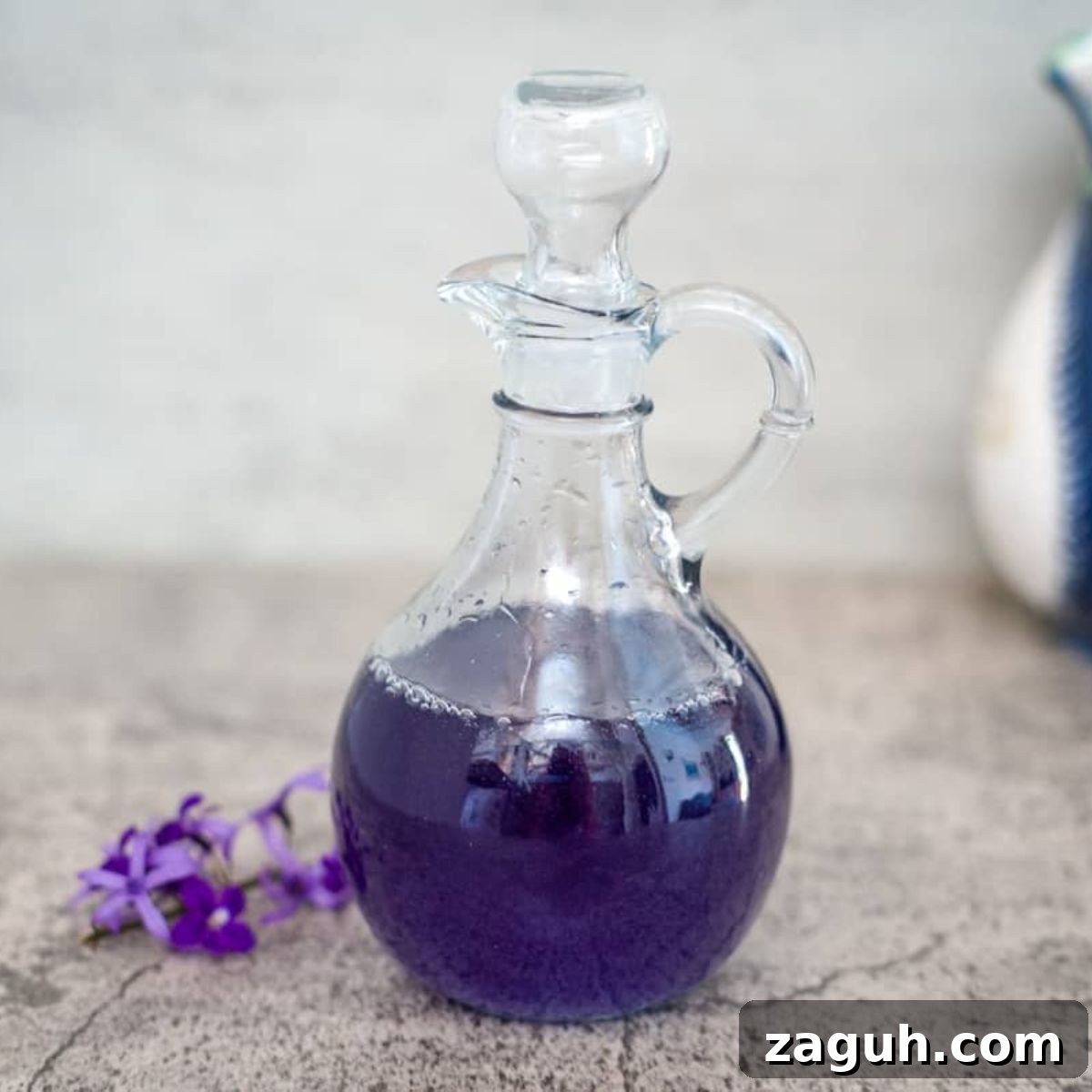
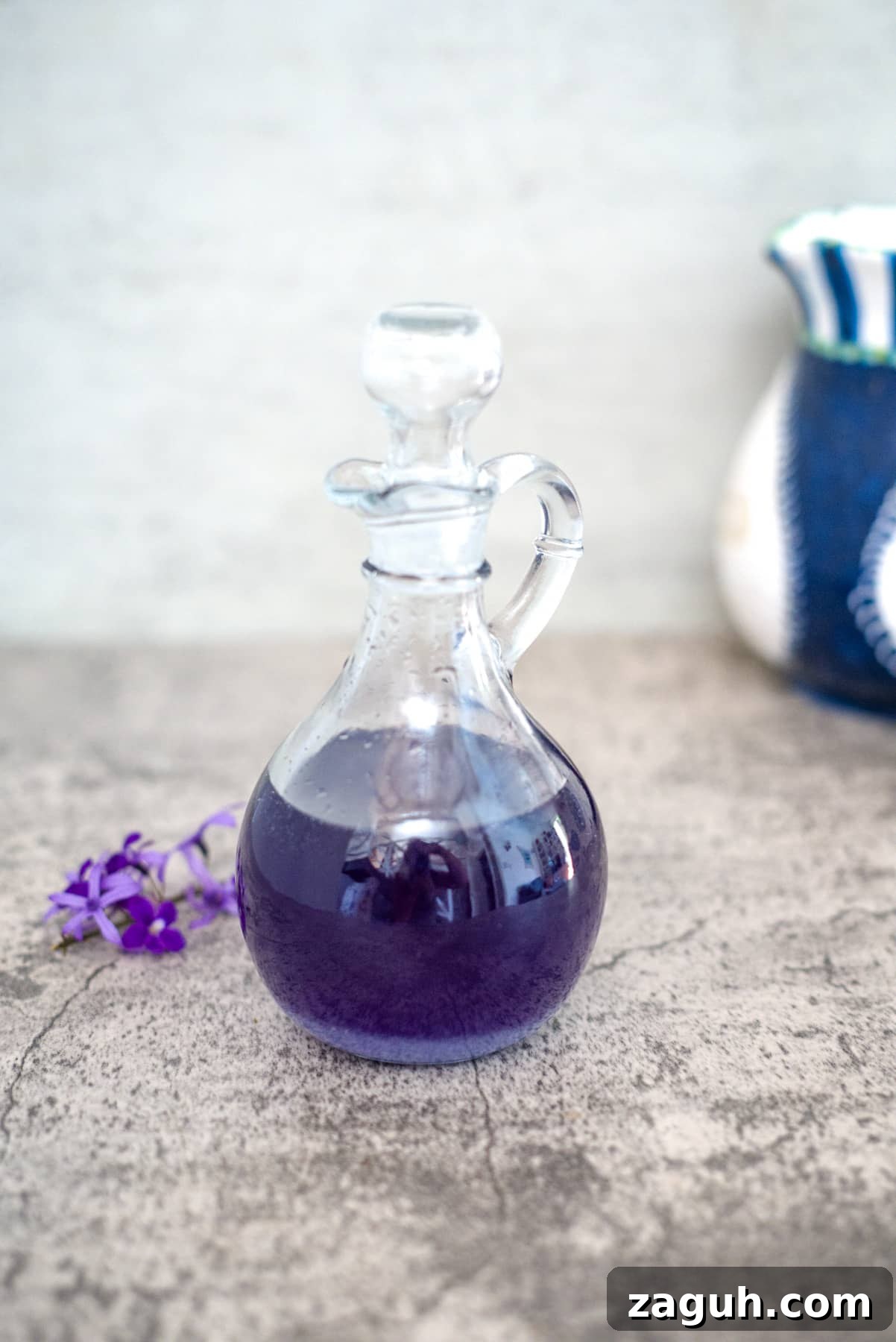
This sugar-free lavender syrup is an elegant way to add floral flavor to drinks and desserts without added sugar. Using allulose—a low-calorie sugar substitute that dissolves well and has minimal impact on blood sugar—creates a clear, sweet syrup ideal for coffee, tea, cocktails, and desserts.
This post may contain affiliate links. Please read my disclosure policy for more information.
Is Lavender Edible?
Yes. Culinary lavender is perfectly safe to eat and is used frequently in cooking and baking. Choose lavender labeled “culinary” or “food-grade”—these varieties are grown for flavor rather than ornamental use. Only use the flowers in recipes; stems and leaves can be bitter.
Culinary lavender tends to be sweeter and less pungent than ornamental types. When measuring flavor, start with a small amount: lavender can be quite pronounced, and it’s easy to overpower a dish.
Where Can You Purchase Culinary Lavender?
Culinary lavender is available from multiple sources:
- Local health food stores or specialty markets often carry dried culinary lavender in the spice or baking aisle.
- Online retailers and specialty herb shops sell dried flowers, extracts, and infused products. Look for items labeled food-grade.
- Farmer’s markets and local lavender farms are excellent sources for fresh or dried culinary lavender; many farms offer lavender for picking during the season.
When buying, check that the lavender is labeled for culinary use and review storage instructions—dried lavender will lose potency over time if not stored in an airtight container away from light and heat.
Ingredients
This simple sugar-free syrup uses just four ingredients.
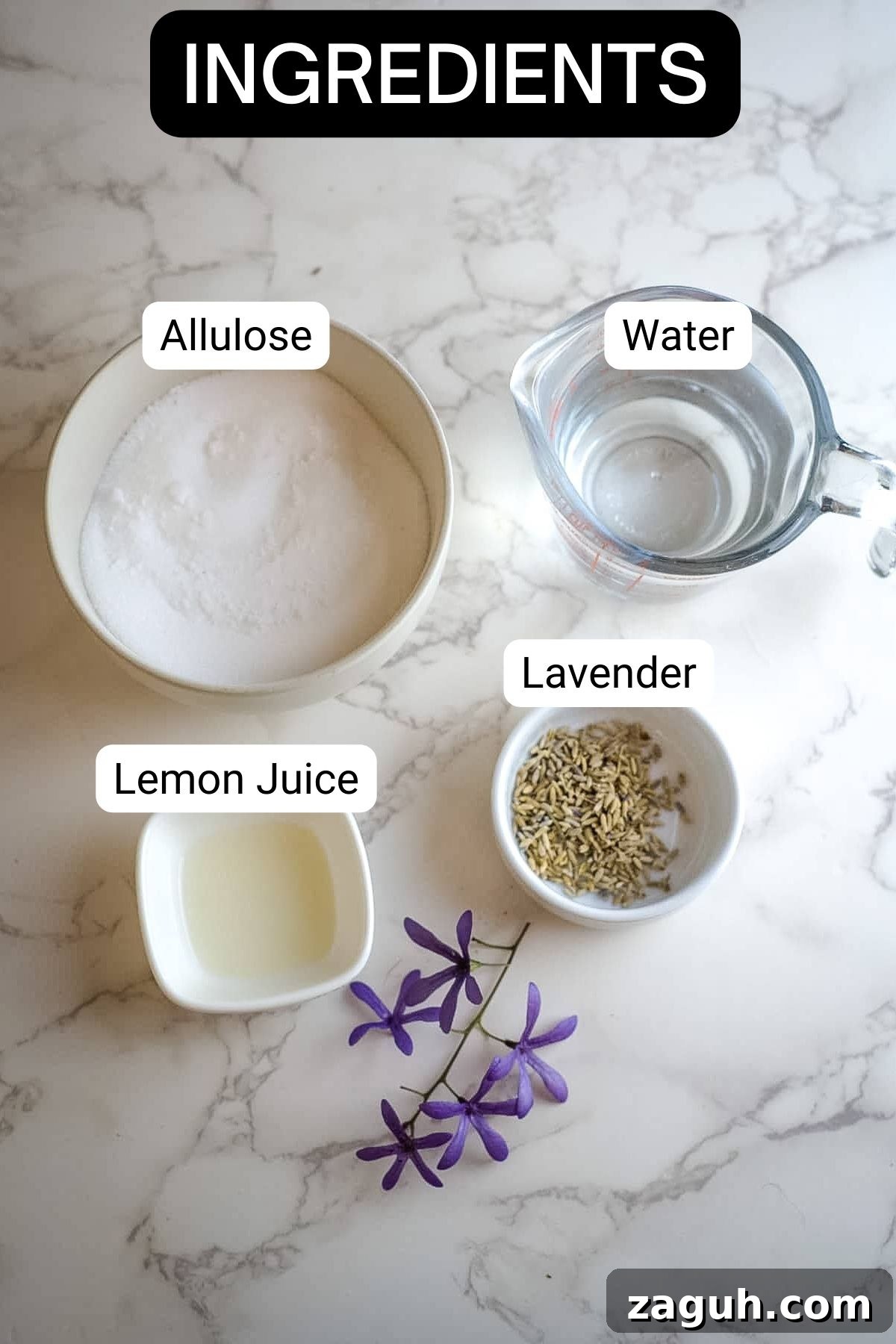
Allulose works well here because it dissolves cleanly without crystallizing. If you prefer, other low-carb sweeteners that behave like sugar in syrups—such as monk fruit blends—can be substituted, though textures and sweetness levels may vary.
Adding lemon juice can shift the syrup to a pale lilac color as the acid reacts with lavender. If you want a more vivid color, a drop or two of food coloring can be added, but it isn’t necessary for flavor.
How to Make Lavender Syrup Sugar Free
This is an easy keto-friendly syrup that comes together on the stovetop.
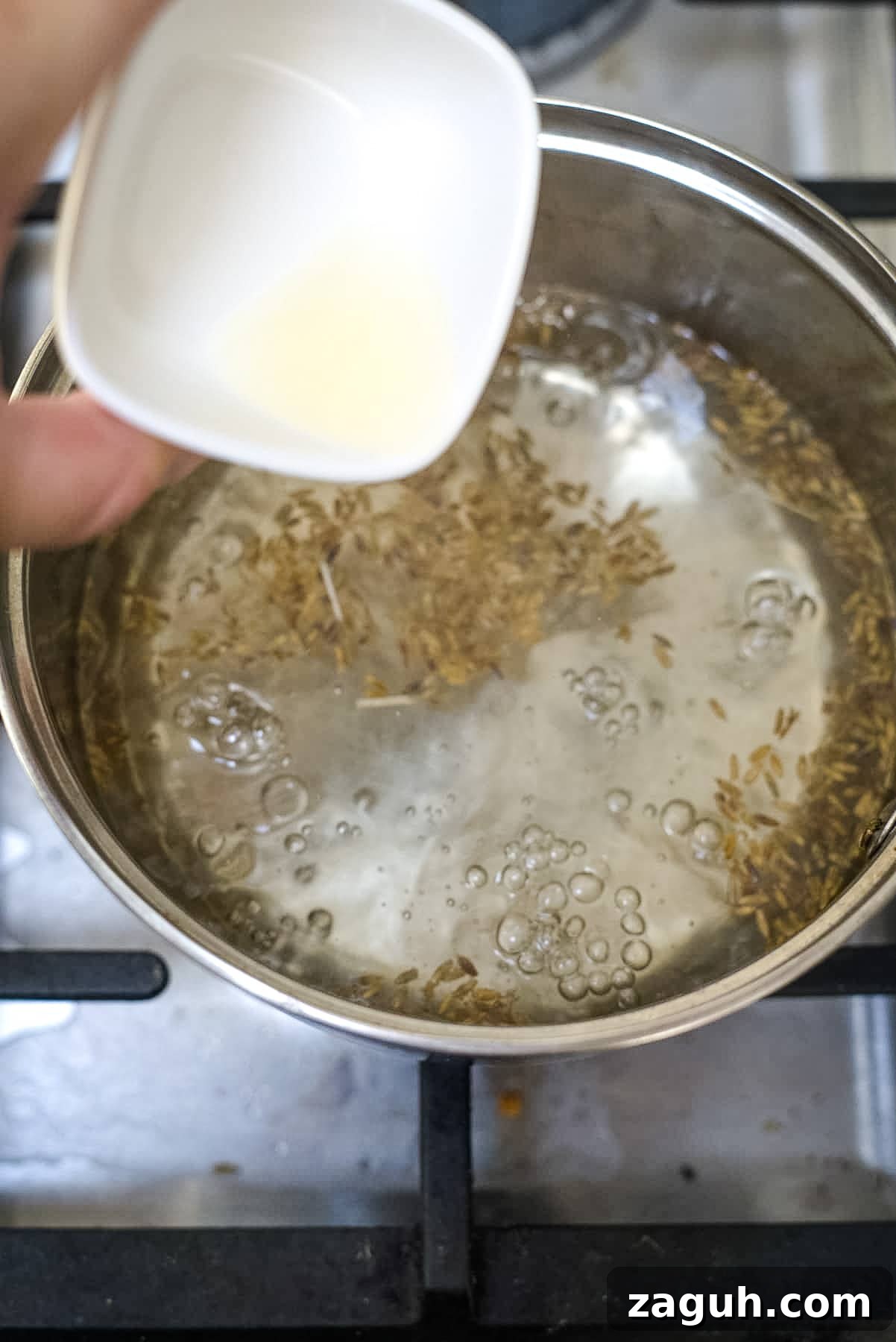
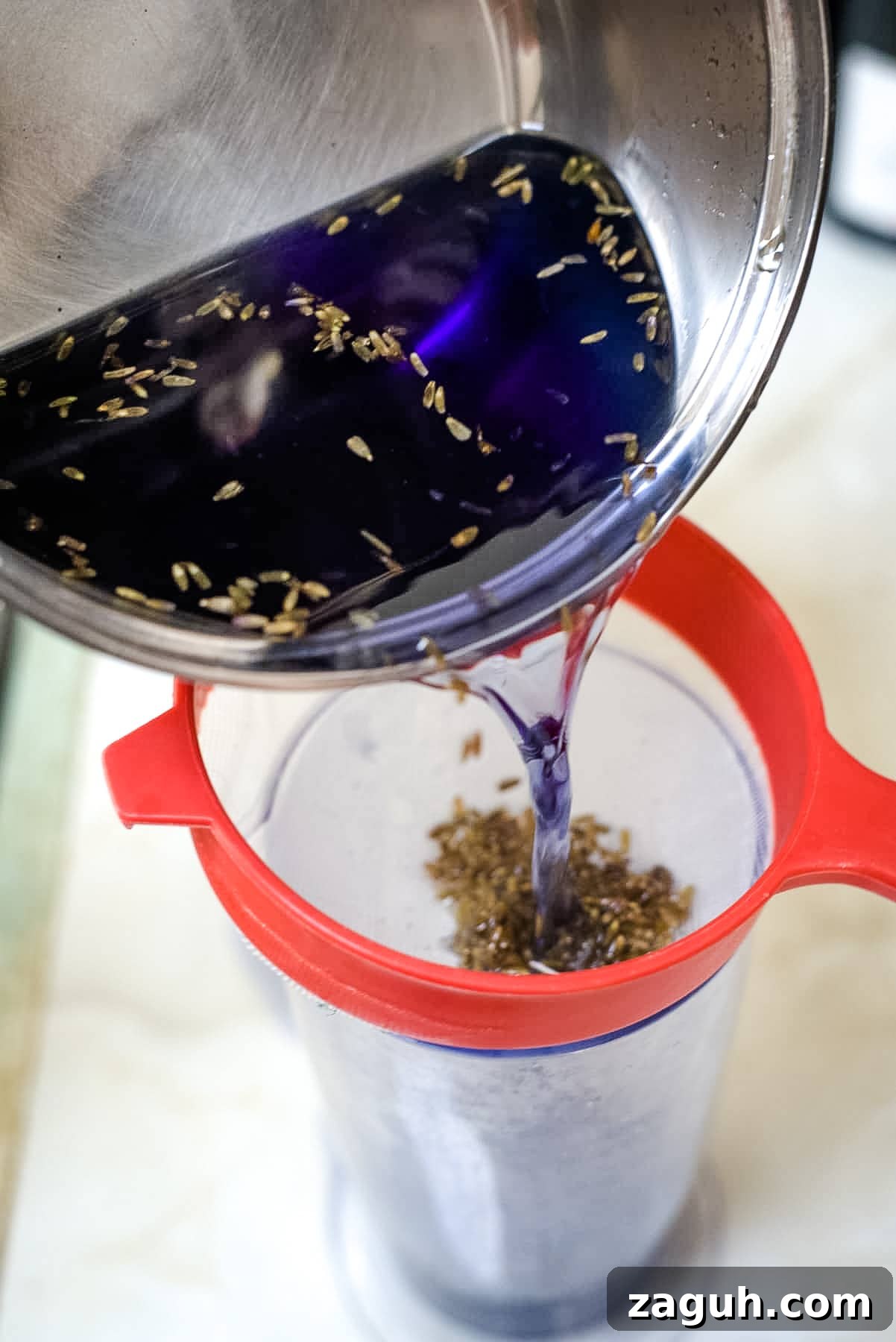
Combine water, allulose, and dried culinary lavender in a saucepan. Bring to a gentle boil, then reduce heat and simmer for 10–15 minutes to extract the lavender flavor. Stir in lemon juice near the end to brighten the flavor and color. Remove from heat and let cool briefly, then strain through a fine-mesh strainer or cheesecloth to remove the flowers. Transfer to a clean jar or bottle and refrigerate. The syrup will keep for up to two weeks.
How to Use Sugar Free Lavender Syrup
Sugar-free lavender syrup is versatile. Try these ideas:
- Add a splash to coffee, lattes, or iced tea for a floral twist.
- Sweeten lemonade, sparkling water, or fruit juices with the syrup.
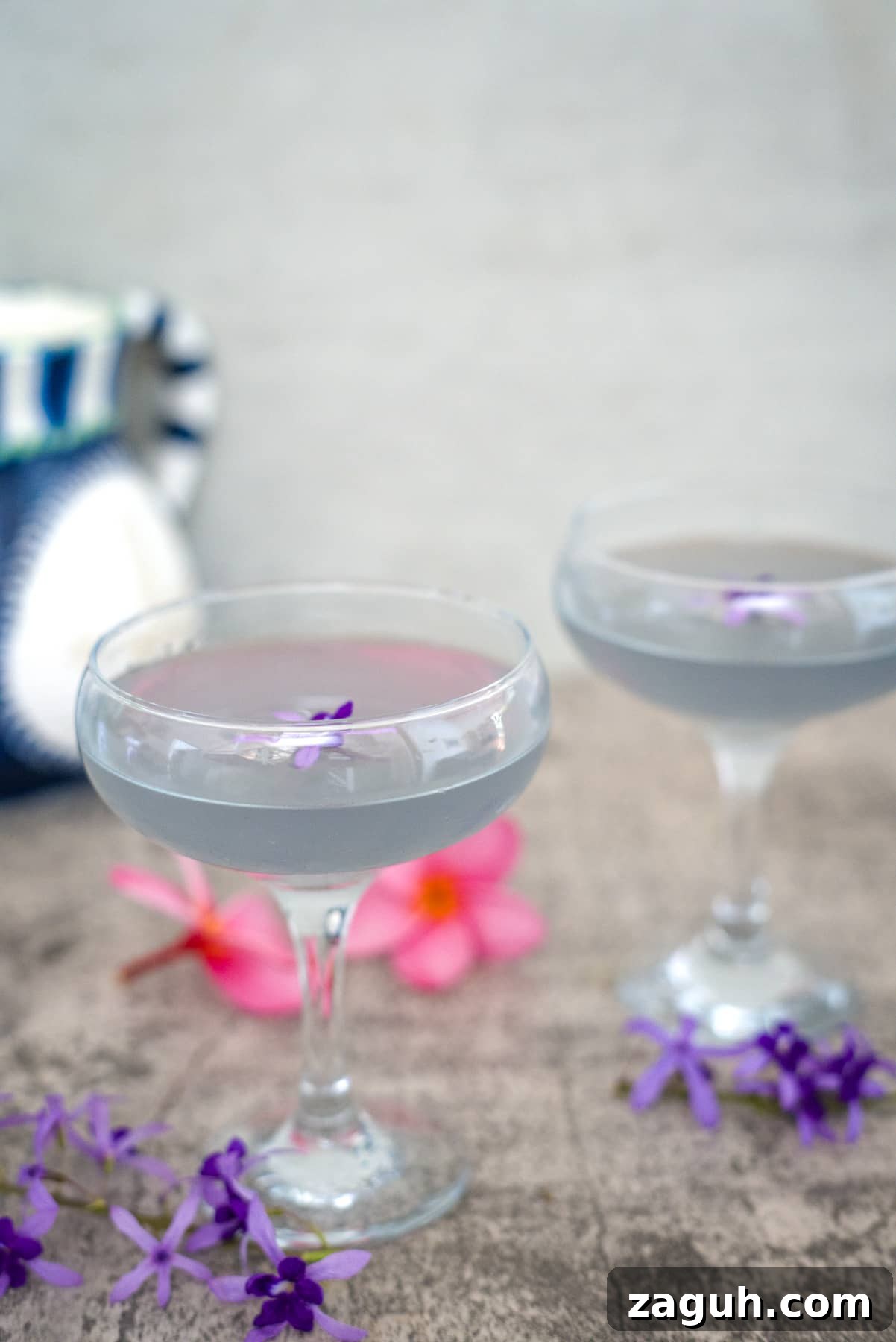
- Use it in cocktails—lavender pairs beautifully with sparkling wine or gin.
- Drizzle over ice cream, panna cotta, or fruit-based desserts for aroma and sweetness.
- Incorporate into batters, fillings, or frostings to flavor baked goods—try it in cupcake frosting for a delicate floral note.
Sugar Free Lavender Syrup
Angela Coleby
Need Metric Measurements?
Toggle between US cups and Metric grams as needed.
Ingredients
- 1 cup water
- 1 cup allulose
- 1 ½ tablespoons dried culinary lavender
- 1 teaspoon lemon juice
Instructions
- In a medium saucepan, combine the water, allulose, and dried lavender. Stir to dissolve the allulose.
- Bring to a boil over medium-high heat, stirring. Reduce heat to low and simmer 10–15 minutes, stirring occasionally to extract the lavender flavor.
- Stir in the lemon juice; the color may shift to a pale lavender. If desired, add a few drops of food coloring for a brighter hue.
- Remove from heat and let the mixture cool for a few minutes.
- Strain through a fine-mesh strainer or cheesecloth to remove the lavender flowers.
- Transfer the syrup to a clean jar or bottle and refrigerate. Store for up to 2 weeks.
Notes
Makes about 1 cup of syrup. One serving is roughly 2 tablespoons.
Nutrition information is an estimate calculated from ingredients and may vary based on product brands and measurements.
Nutrition
The nutrition information is an estimate provided by an online nutrition calculator.