
Learn how to make stamped fondant cookies, turning simple sugar cookies into perfect party favors and personalized treats. This step-by-step guide explains how to use fondant stamps and shares practical tips and tricks for success.

Decorating cookies with fondant is one of the quickest ways to create polished, professional-looking treats, and fondant stamps make it even easier. Stamps let you imprint or raise a design on fondant, adding text or imagery without piping or hand-painting every detail. Stamping is also far faster than piping the same design on multiple cookies.
This guide covers the types of fondant stamps, where to find them, how to use them for both debossed and embossed effects, painting techniques, and practical tips to help you achieve consistent results.

Types of Fondant Stamps
There are two main styles of fondant stamps: debossing stamps, which press a design into the fondant, and embossing (raised) stamps, which create a raised design on the surface. Debossed designs are simple and fast and can be stamped either before or after placing fondant on a cookie. Embossed stamps require a bit more practice but deliver a striking raised design that can be painted for extra impact. Most stamps are made from laser-cut acrylic or 3D-printed plastic.
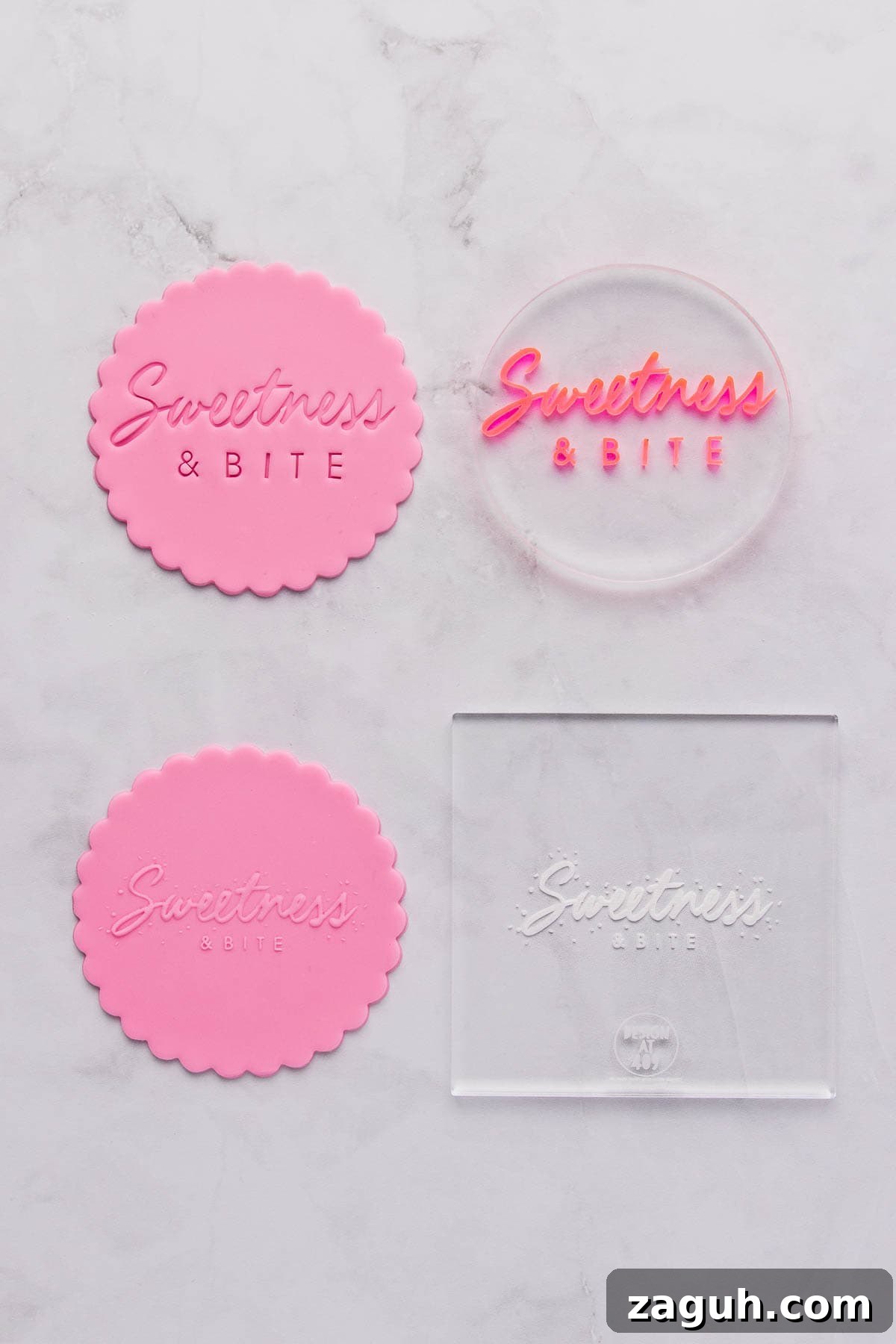
Where to Buy Fondant Stamps
You can find fondant stamps at most cake-decorating suppliers and online stores. Search for “acrylic fondant stamps,” “embossing stamps,” or “alphabet cake stamps” to locate options for personalized messages. Some independent makers offer custom stamps if you want a unique design. Always check cleaning instructions for the stamps you buy, since care recommendations vary by material.
Edible Supplies
- Cookies – Use your favorite rolled sugar cookie recipe that holds its shape well.
- Fondant – Color with gel food coloring if desired. Prepare and rest colored fondant before use to reduce stickiness.
- Sugar syrup or cooled boiled water – For attaching fondant to cookies.
- Cornstarch or icing sugar – For dusting stamps and work surfaces.
Tools
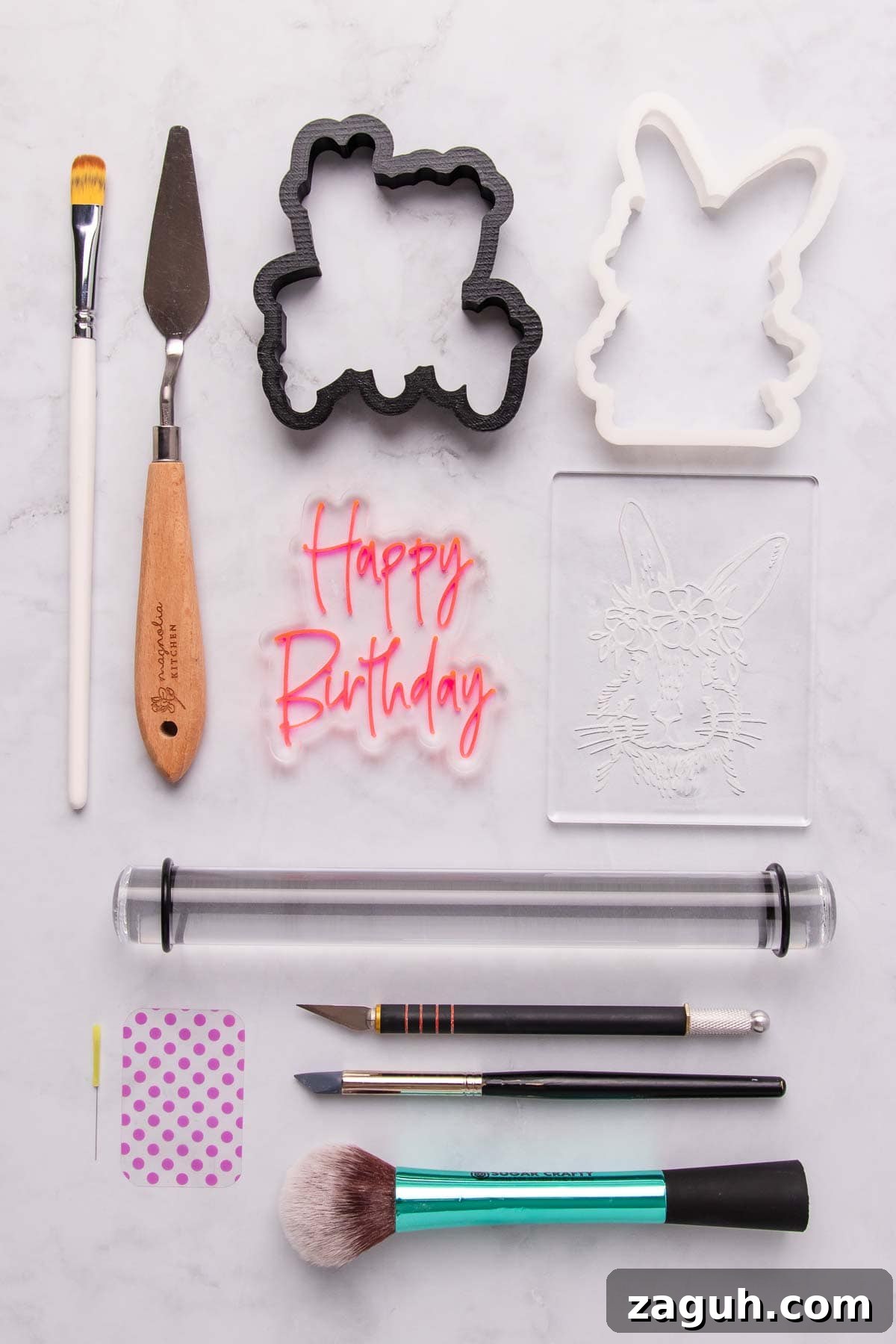
- Fondant stamps
- Cookie cutters – If your stamp has a matching cutter use it; otherwise choose a cutter slightly larger than the stamped area.
- Rolling pin – A spacer-equipped rolling pin helps achieve a consistent thickness.
- Food-only brushes – One for applying sugar syrup and one fluffy brush for dusting cornstarch.
- Offset spatula – Helpful for lifting and positioning fondant.
- Flexible fondant smoother – For gentle finishing, if needed.
- Pin or needle – To release air bubbles.
- Scalpel or small knife – For trimming edges.
Quick Tips
- Clean and dry stamps before use to avoid dust or moisture marking the fondant.
- Color fondant several hours ahead and allow it to rest; rested fondant is easier to handle.
- Work one cookie at a time until you’re comfortable with the process, then scale up to multiple pieces.
How to Make Stamped Fondant Cookies
Debossing Fondant Stamps
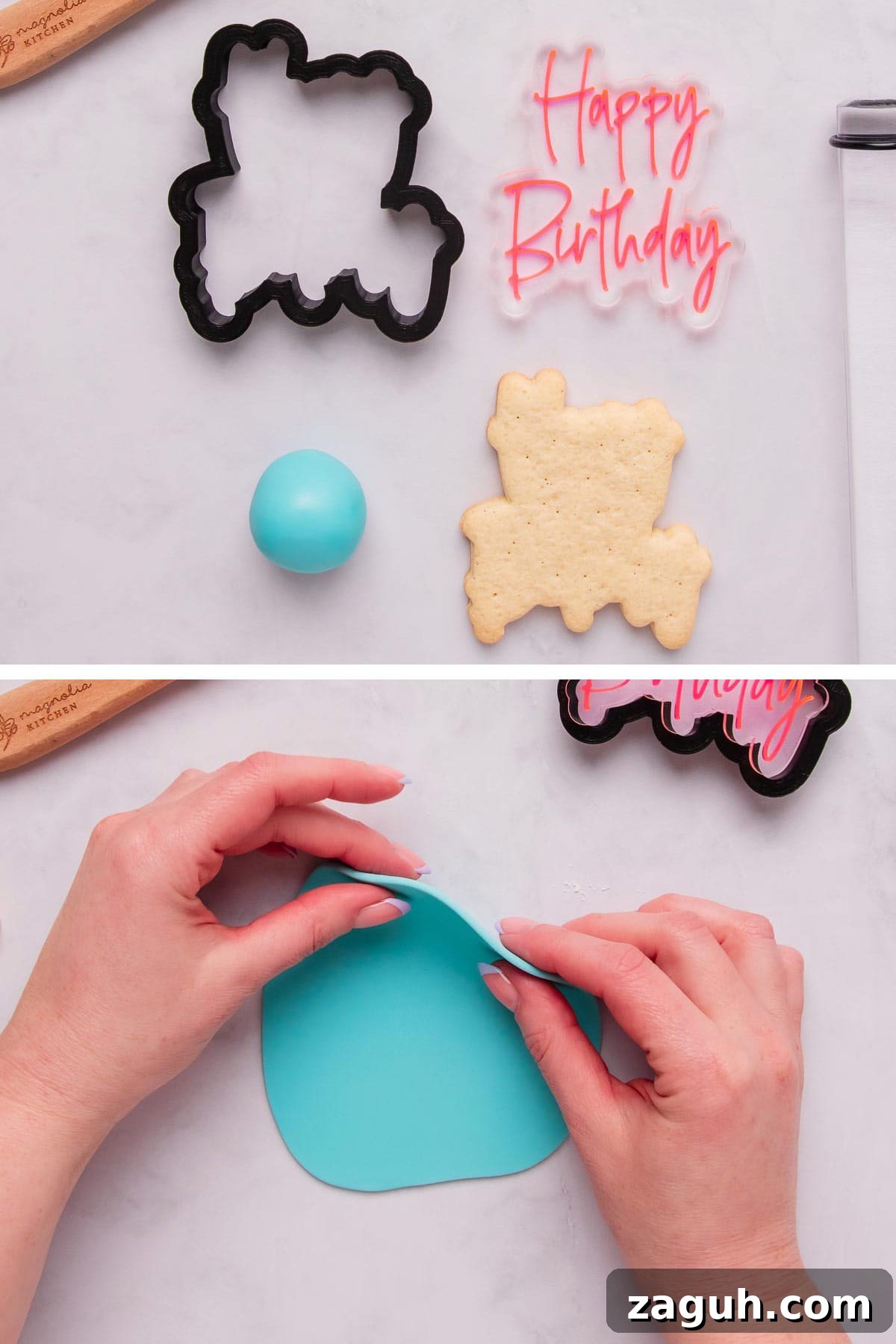
Knead a golf-ball-sized piece of fondant until pliable, then roll it to about 2–3 mm thick. Make sure the rolled piece is large enough for your cutter and design.
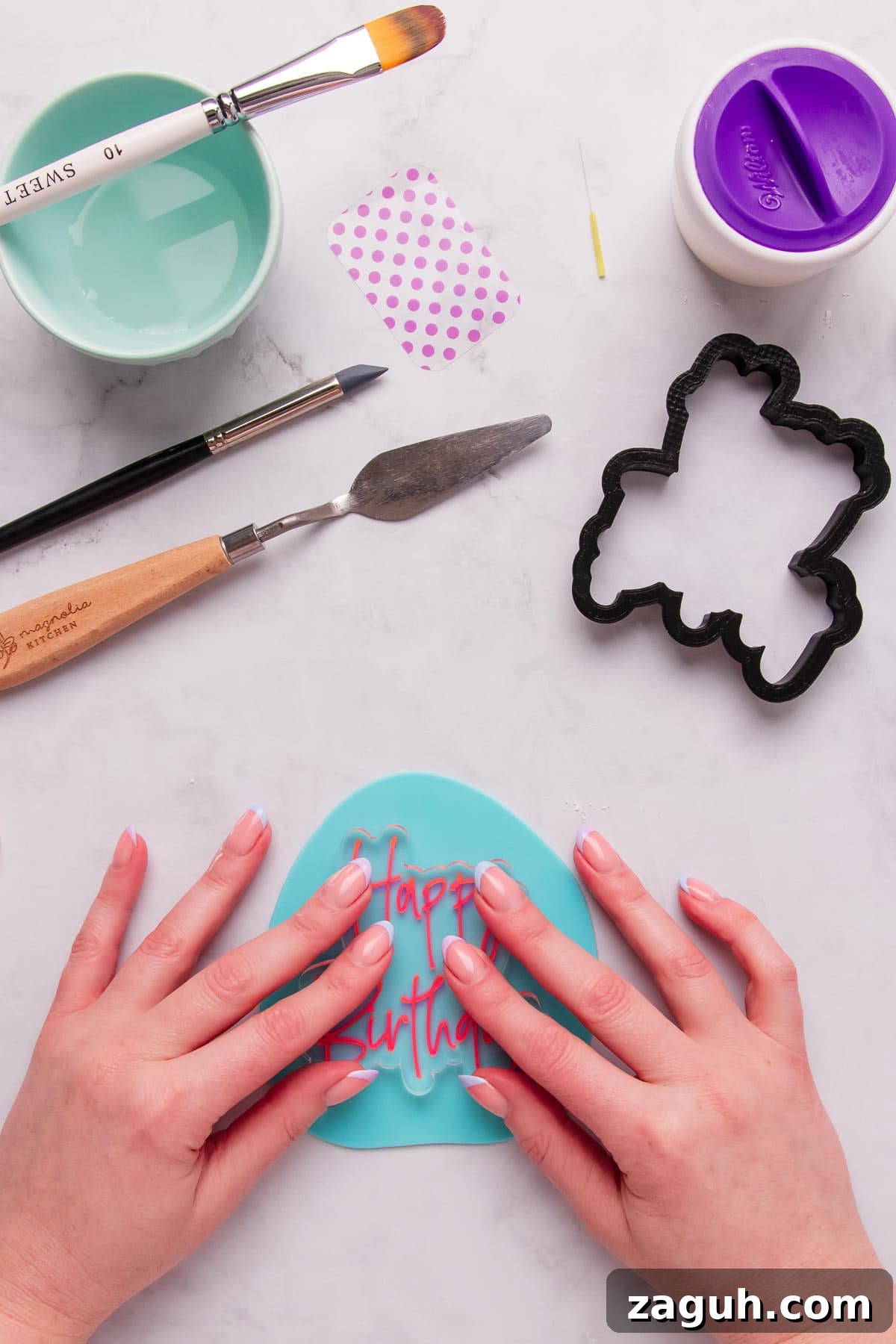
Allow the surface to dry slightly or dust lightly with cornstarch. Press the stamp gently into the fondant with enough pressure to leave a clear impression, but not so hard that you push through the fondant. Adjust pressure as needed for a clean imprint.
Line up a cookie cutter over the stamped fondant and cut out the shape. Use a scalpel to neaten any rough edges. Lightly brush the cookie top with sugar syrup or cooled water, position the fondant, and smooth to remove air pockets. If the fondant is floppy, let it firm briefly before transferring.
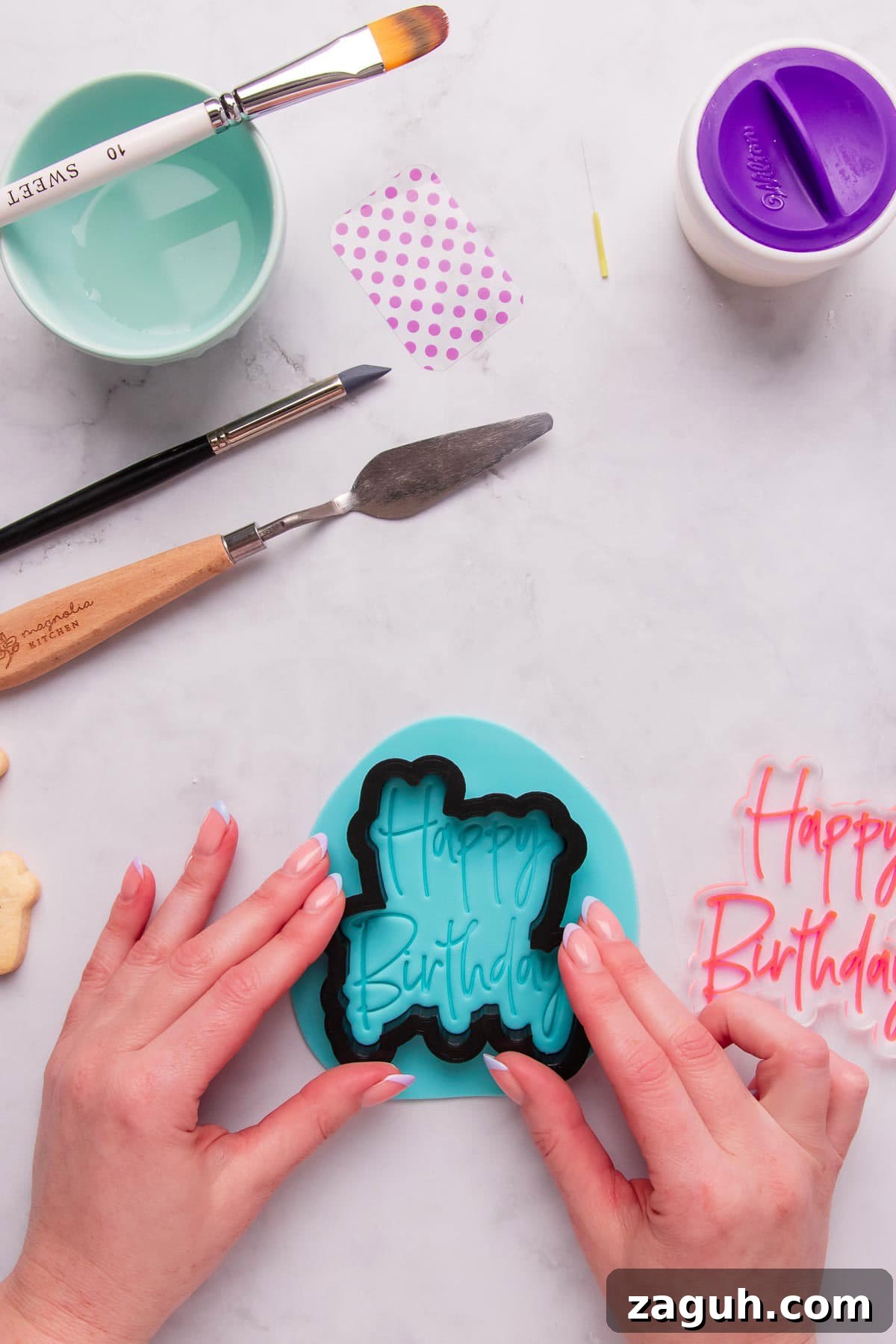
Finish by gently buffing the surface with a flexible smoother if needed, taking care not to distort the stamped design. Trim edges and let the fondant dry before storing. Keep cookies covered and away from direct light to prevent color fading.
Embossing (Raised) Fondant Stamps
Embossing stamps work best when the fondant is fresh and slightly pliable. Roll enough fondant for one or two cookies to avoid drying out. Dust the stamp lightly with cornstarch, tap off excess, then press the stamp evenly into the fondant.
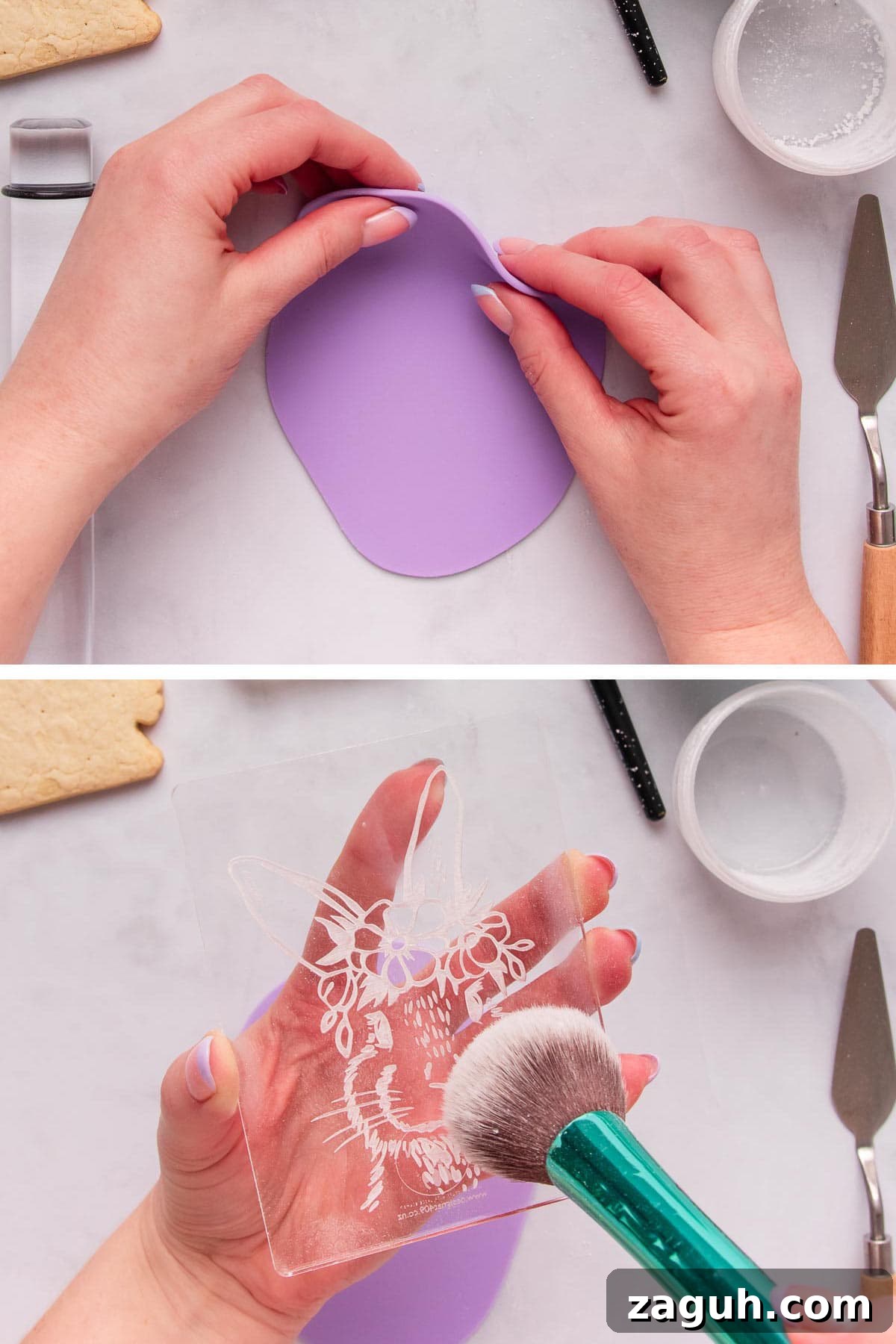
Pressure depends on fondant softness and stamp depth—test on a scrap piece first. If the impression is incomplete, realign carefully and press again, or reroll if alignment is difficult. Cut out the embossed shape, trim edges, then attach to the cookie with a light brush of sugar syrup. Avoid pressing down on the raised details when positioning.
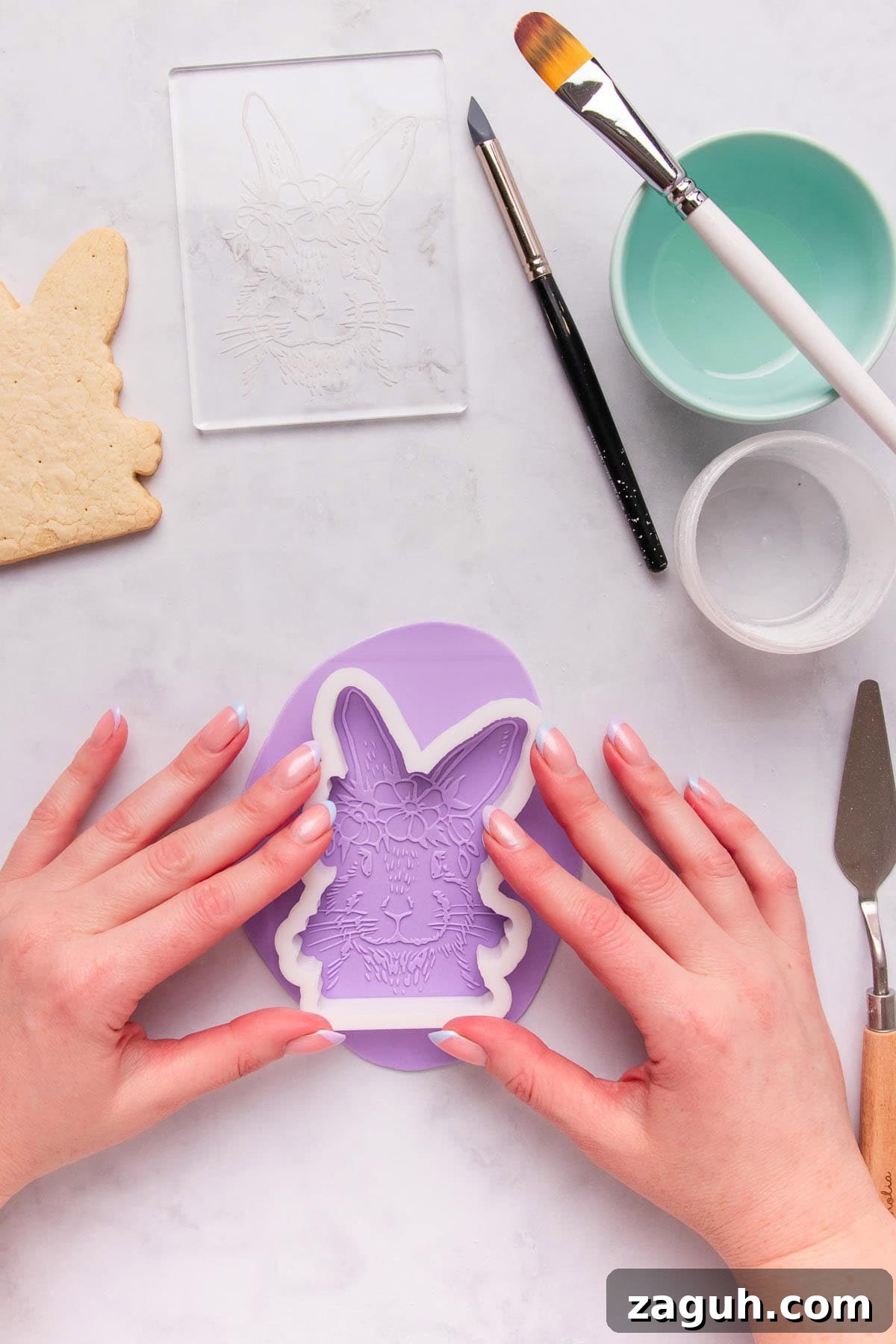
For deeper or highly detailed stamps, roll the fondant slightly thicker (around 4 mm) and consider pressing the fondant into the stamp (stamp upside down) to avoid tearing and reduce air pockets. Remove excess cornstarch with a soft brush before cutting and applying.
Adding Details
Small fondant accents, nonpareils, or sprinkles attached with tiny dabs of edible glue can elevate stamped cookies. Combine stamps to build layered designs—stamp the center first, then work outward so earlier impressions remain crisp. Let fondant dry before packaging; store in an airtight container away from light.

Cleaning the Stamps
Follow manufacturer care instructions. Many stamps are hand-wash only, and some should not be submerged. For delicate stamps, gently remove dried fondant or cornstarch with a soft brush or lint-free cloth to preserve fine details.
Painting a Stamped Fondant Cookie
Painted stamped cookies are fast to decorate because the lines and shapes are already defined. For best results, stamp and let the fondant dry and firm for at least 24 hours before painting. Use glaze-based edible paints that dry fully and won’t rub off.
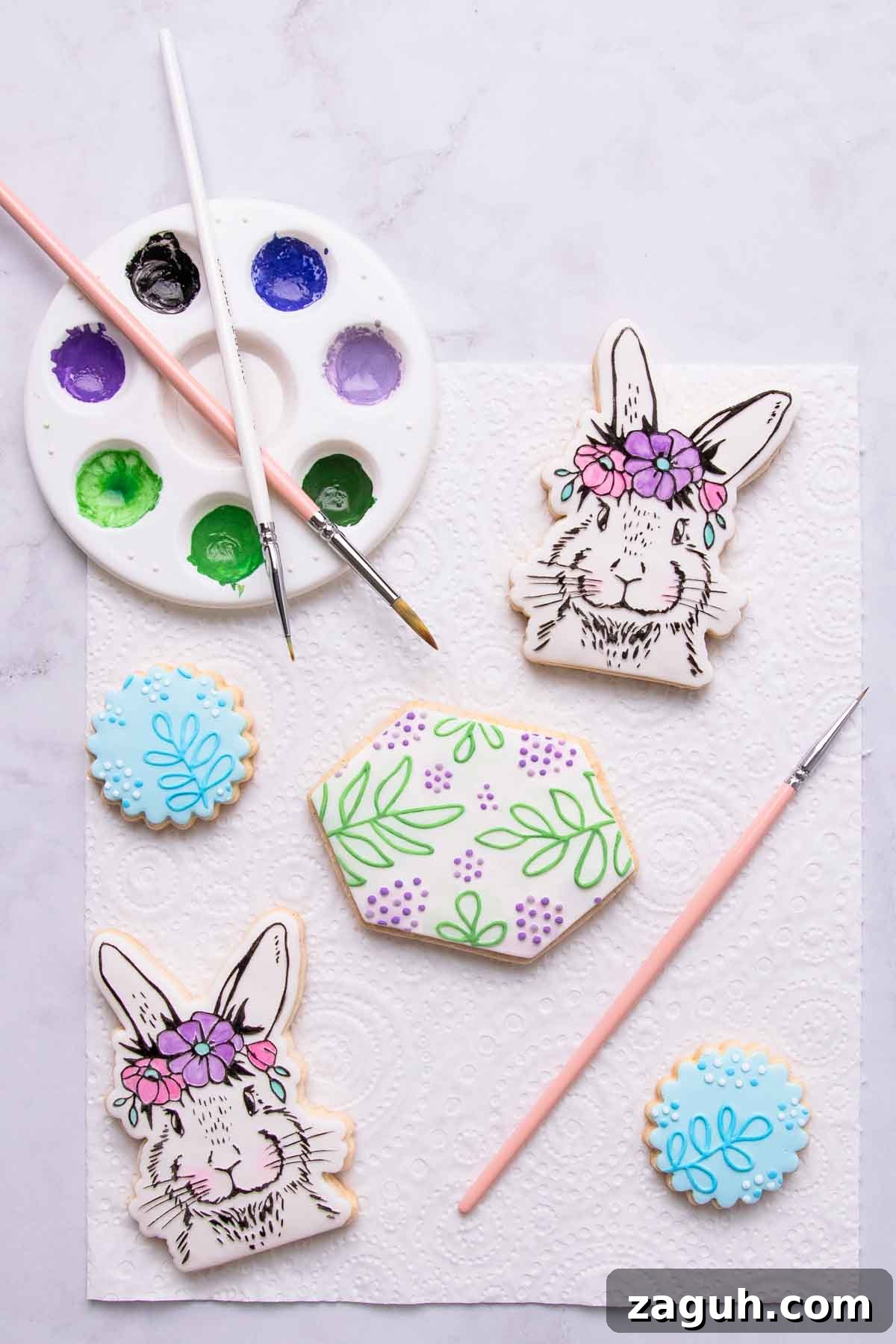
When painting recessed areas, thin the paint to a watercolor consistency and fill those parts first. Let that layer dry. For lines and raised details, use paint at a thicker consistency (or only lightly thinned) and a fine pointed brush to avoid dripping. Paint at a slight angle to the raised lines so the brush bristles don’t slip off the edges.
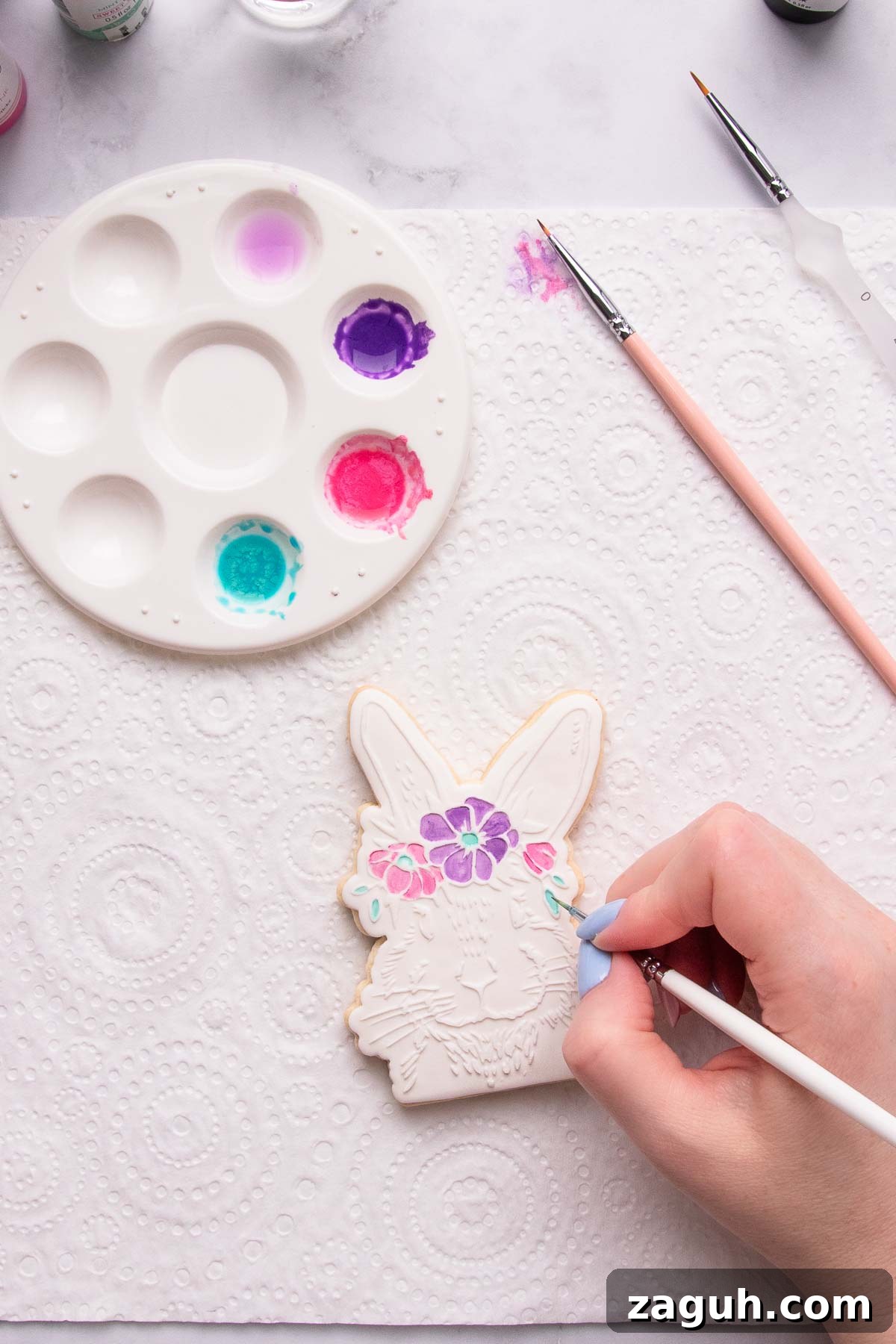
Work methodically to avoid smudging—either paint in a direction that prevents contact with wet areas or rotate the cookie as you work. Allow each paint layer to dry before adding more. You can also do a subtle wash of color over the entire fondant before defining raised lines.
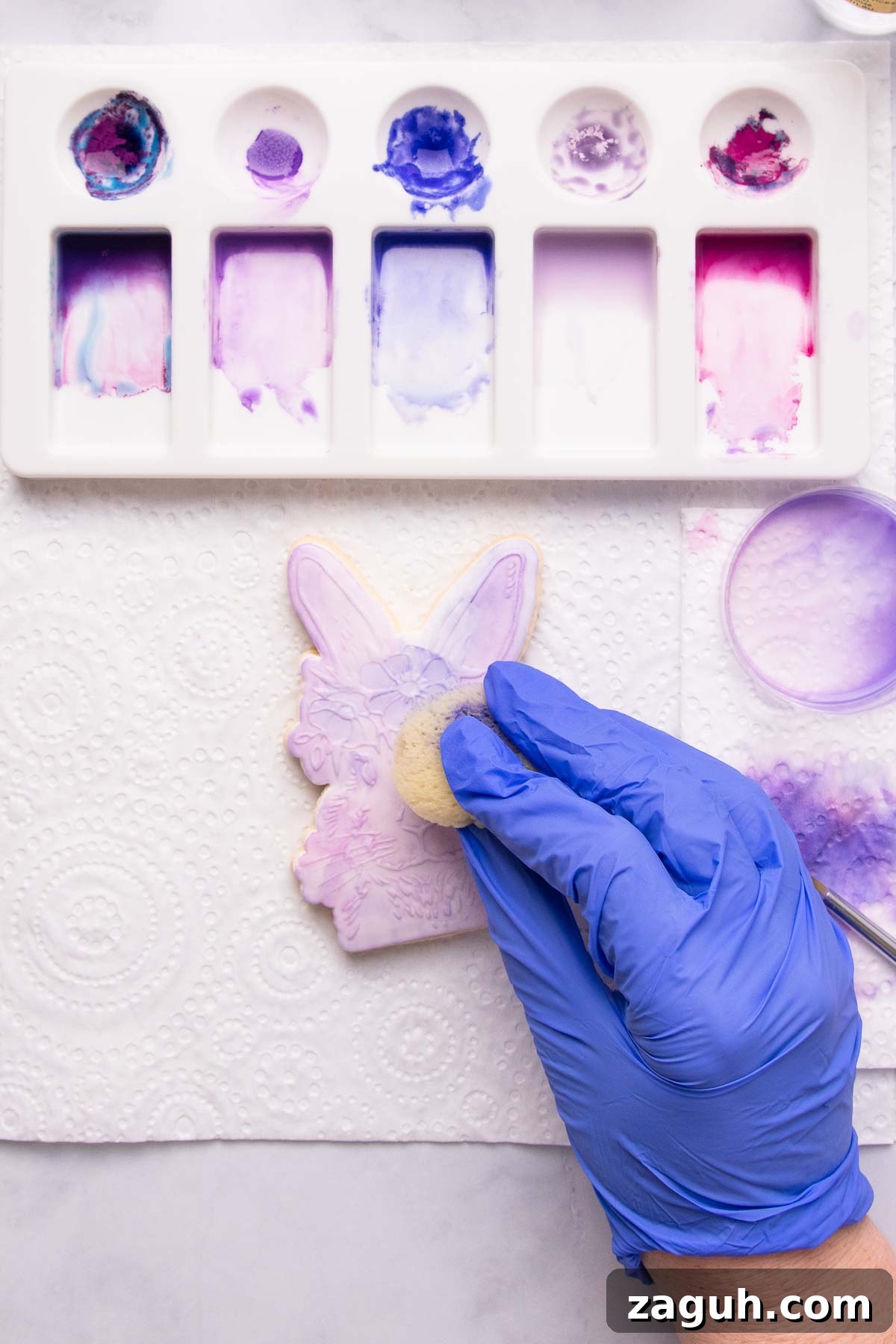
Final note: always let painted fondant cure and dry fully before packaging. Keep finished cookies in an airtight container away from direct sunlight to maintain color and detail.
More Tutorials You May Like
- Sugar Cookies with Fondant
- Watercolor Cookies Tutorial
- How to Cover a Cake With Fondant
- Edible Sand for Cakes and Cookies
- Gluten Free Chocolate Cookies
I hope this guide helps you feel confident trying stamped fondant cookies. If you have questions, feel free to ask. Happy stamping!