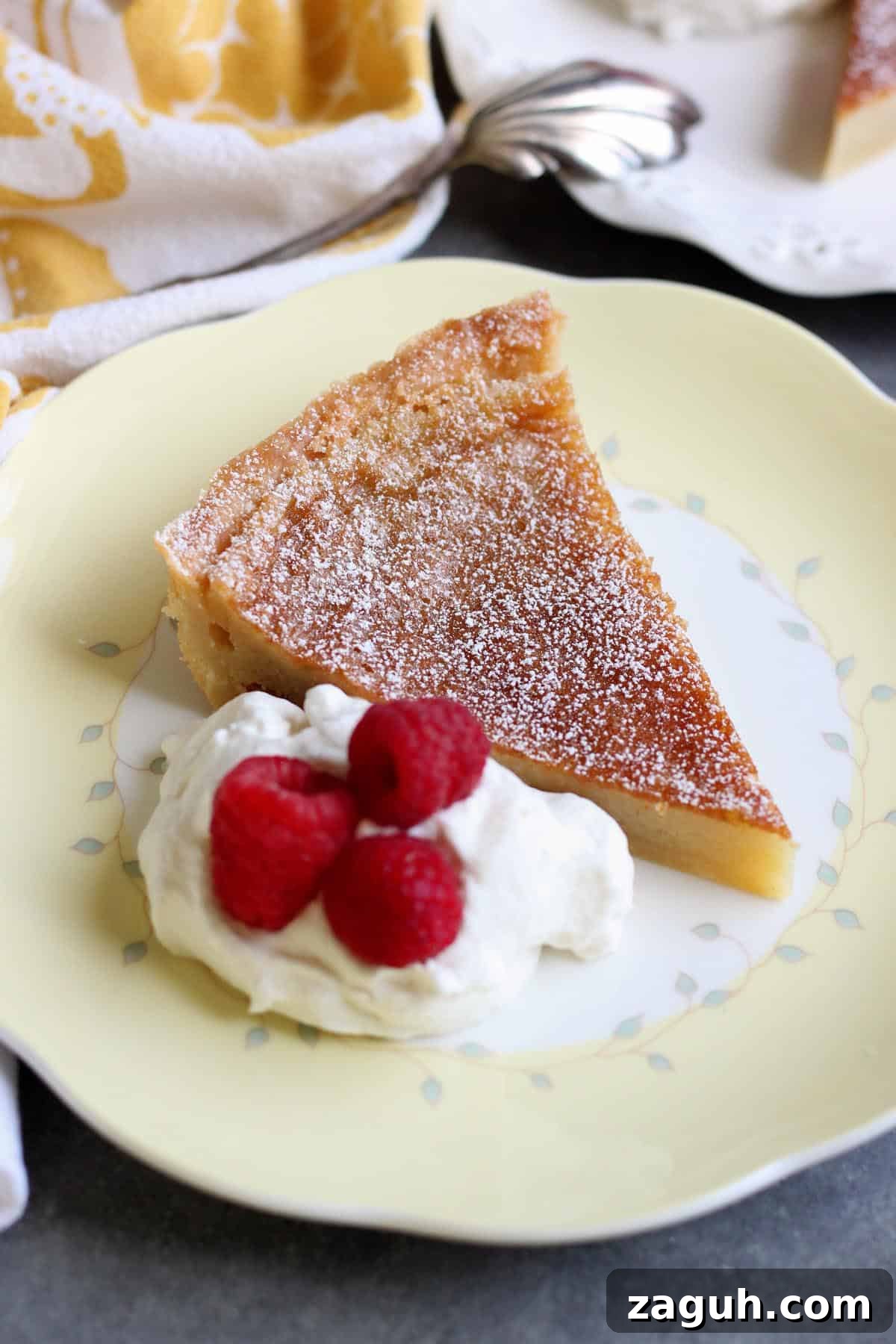
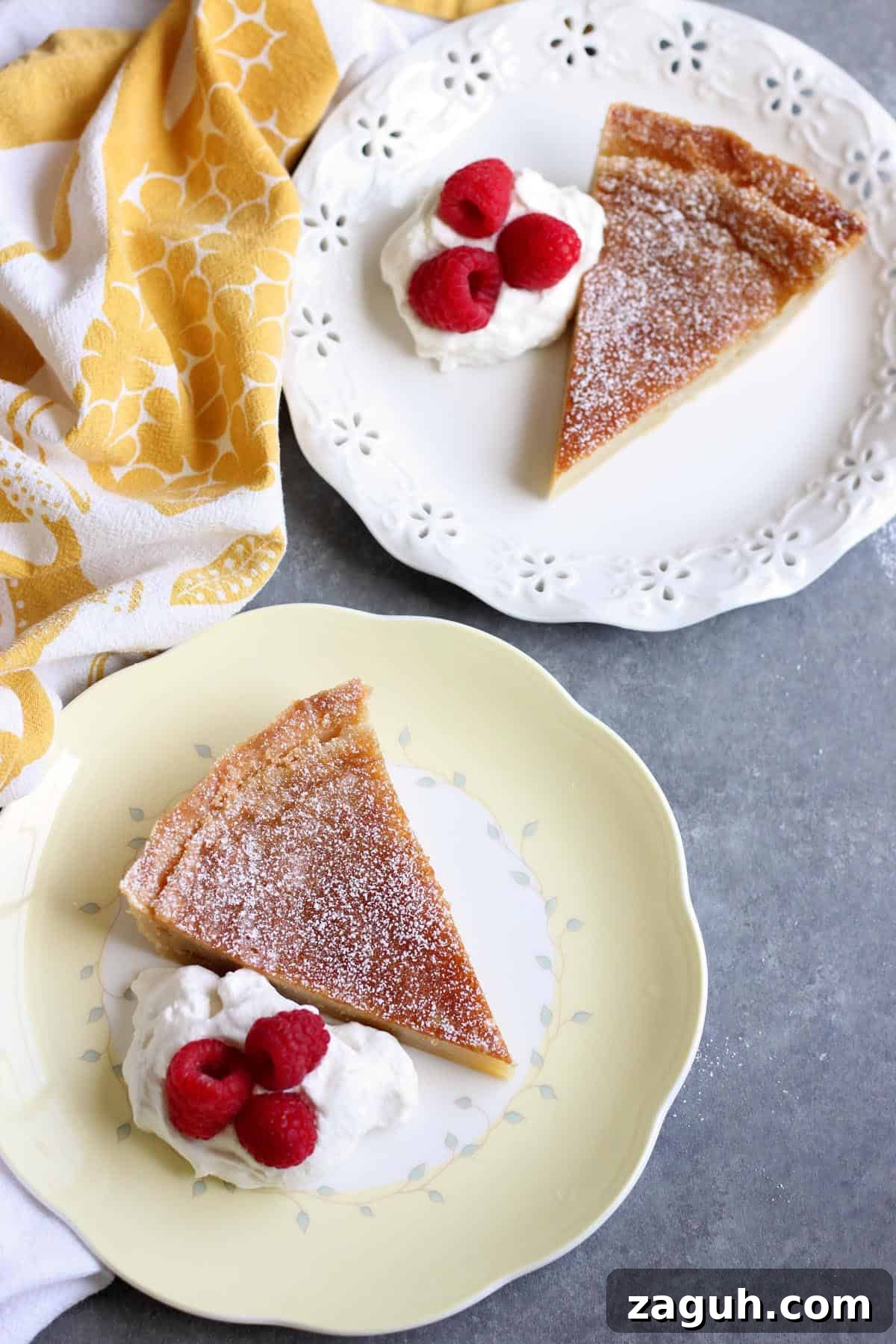
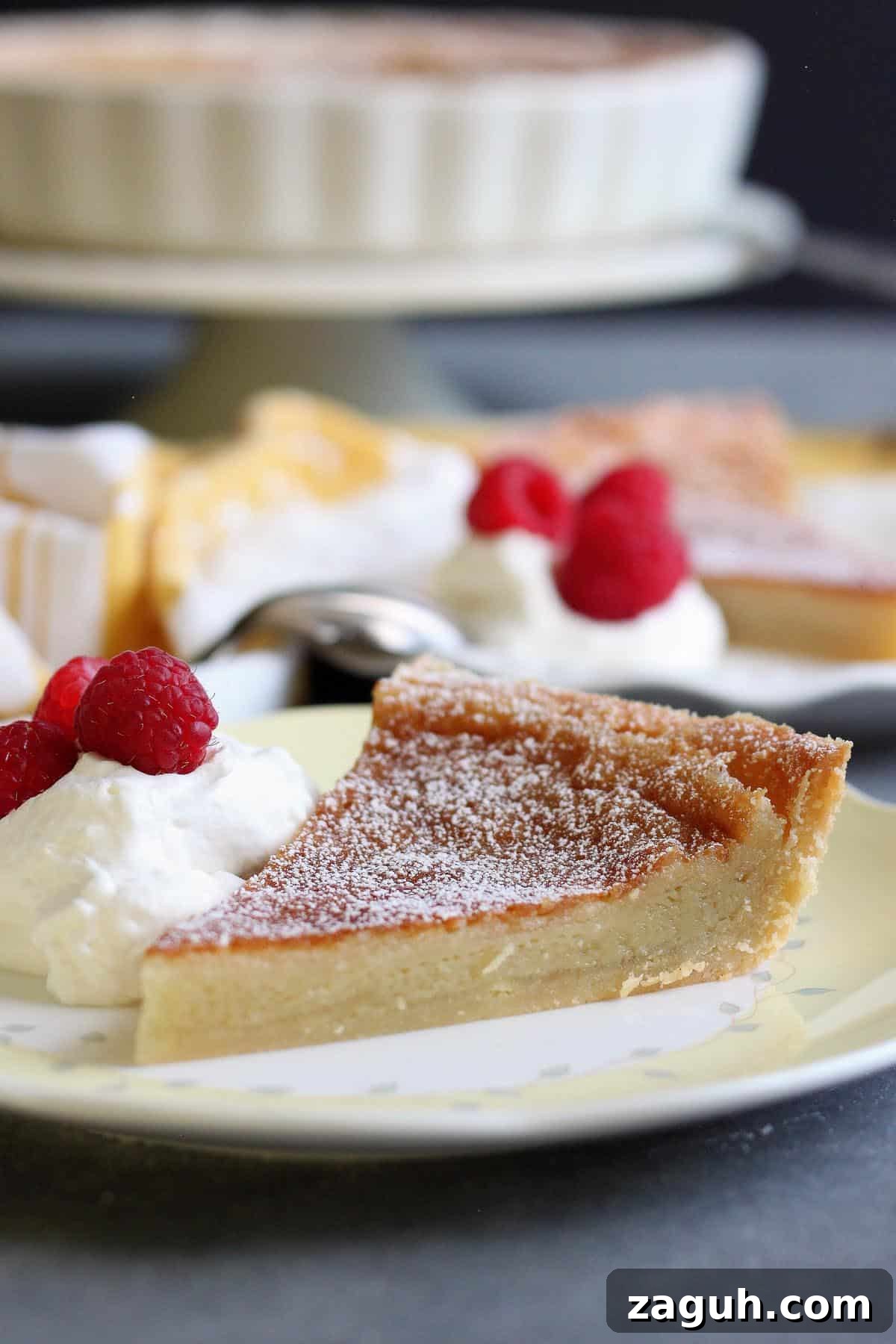
This custard pie is a less-sweet take on a classic chess pie. If traditional versions are too sugary for you, this recipe offers the same rich custard flavor with a gentler sweetness.
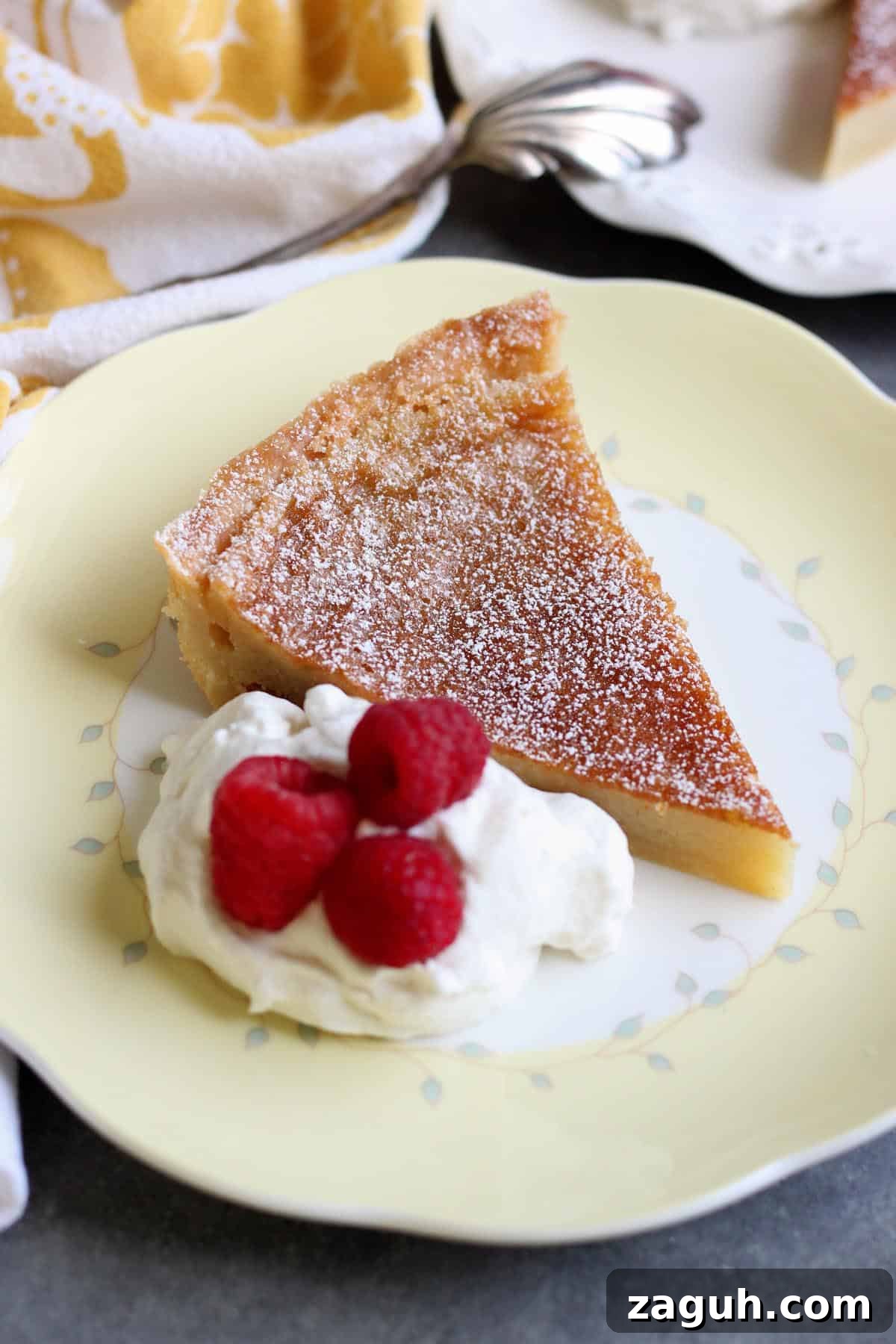
This recipe grew out of the custard filling I used in my S’mores pie and chocolate chip cookie pie — the filling was so good that it deserved its own straightforward recipe. While it was originally shared as a chess pie tart, I call it a custard pie here because it uses significantly less sugar than most chess pie recipes and has a smooth, balanced custard texture.
Table of Contents
- Why you’ll love this recipe
- Helpful tools
- Ingredients and substitutions
- How to make the custard pie
- Baker’s tips
- Storage
- FAQs
- More creamy pies
- Recipe card
Why you’ll love this recipe
- Balanced sweetness — delivers the custardy richness of a chess pie without overwhelming sugar. It’s an ideal option if you want a familiar flavor with less sweetness.
- Simple pantry ingredients — uses everyday items like flour, eggs, butter, and cream but tastes special. It’s elegant enough for guests yet quick enough for weeknight baking.
- Flexible serving options — pairs beautifully with whipped cream, fresh berries, or fruit compotes for added flavor.
Helpful tools
An 8″ shallow tart pan or pie dish is recommended. You’ll also want pie weights or a jar of dry beans for par-baking the crust. A food processor, stand mixer, or simple bowl and pastry cutter will work for making the dough.
Ingredients and substitutions
The full ingredient list and quantities are in the recipe card below. Notes and substitutions:
- All-purpose flour — works well for the crust; substitute pastry flour for a more tender crust. You’ll also use a small amount in the filling.
- Granulated sugar — used in the crust and filling. For deeper flavor, swap in part brown sugar in the filling.
- Salt — kosher salt helps balance sweetness and enhance flavors.
- Butter — use cold, cubed unsalted butter for the crust and softened unsalted butter for the filling.
- Eggs — provide structure and richness. For a slightly richer but less firm custard, try 3 whole eggs + 2 extra yolks instead of 4 whole eggs.
- Heavy cream — gives the filling its creamy texture; use half-and-half for a lighter custard.
- Pure vanilla extract — adds warmth and depth.
- Freshly whipped cream — optional for serving but recommended.
How to make the custard pie
The steps below summarize the process; refer to the recipe card at the end for exact measurements and timings.
Prepare the crust
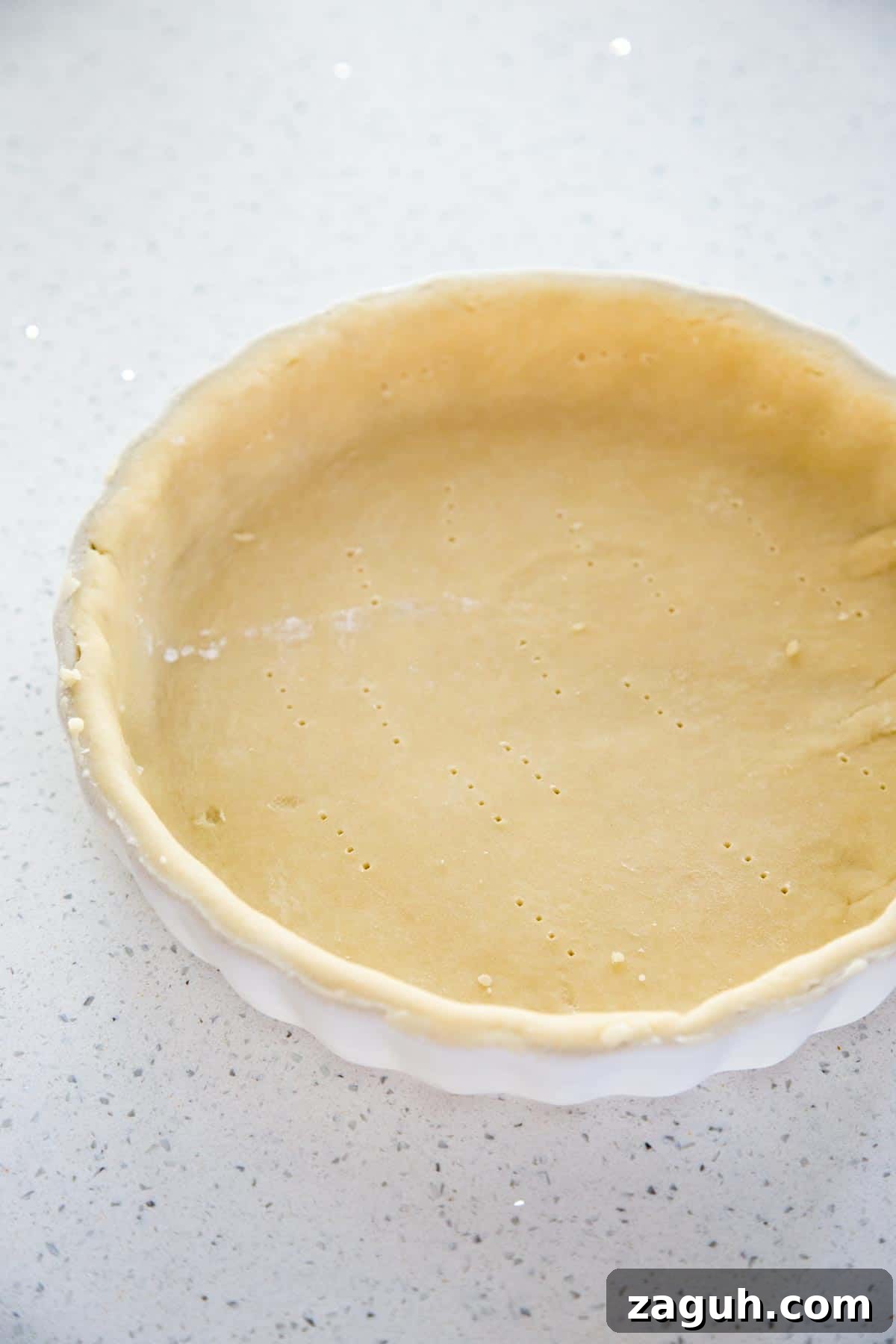
Combine flour, sugar, and salt. Add cold cubed butter and pulse in a food processor until the pieces are pea-sized, or cut in by hand with a pastry cutter. Add cold water a tablespoon at a time and mix until the dough starts to come together. Shape into a disk, wrap, and refrigerate for 1 hour. Roll the chilled dough to fit an 8″ tart pan, press into the pan, trim the excess, then cover and freeze or refrigerate for 10–15 minutes to keep it cold before baking.
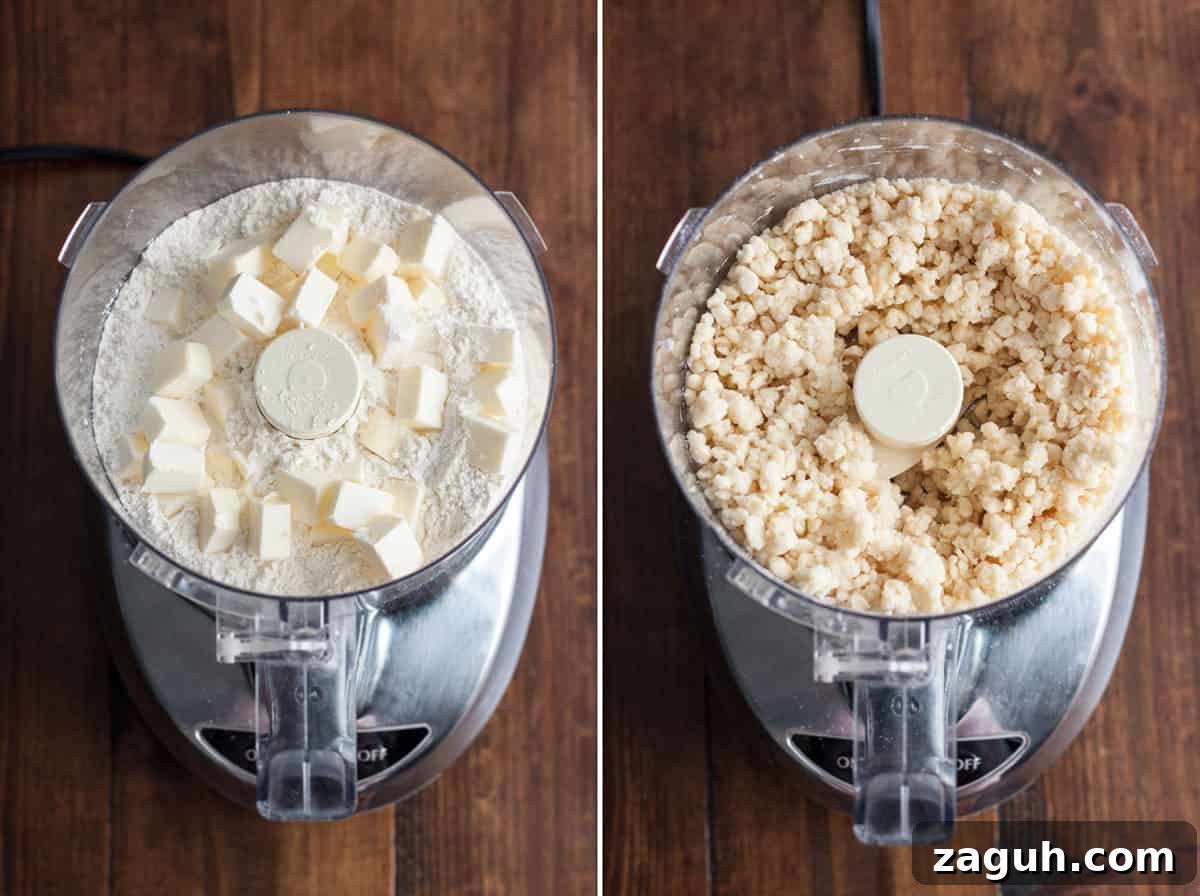
Tip: You don’t need a food processor — a stand mixer or mixing by hand works fine. Keeping the butter cold is key to a flaky crust.
Tip: If space is limited, chill the crust in the refrigerator instead of the freezer. The goal is to keep the dough cold so the butter creates steam during baking for flakiness.
Par-bake the crust
Preheat the oven to 425°F (218°C). Dock the crust with a fork, line with parchment, and add pie weights or beans. Par-bake for 20 minutes, remove weights and parchment, then bake 5 more minutes until lightly golden. Cool on a wire rack. Reduce oven temperature to 350°F (177°C) for the filling.
Prepare the filling
Beat softened butter with sugar and salt until smooth. In a separate bowl whisk eggs, heavy cream, and vanilla, then add to the butter mixture, beating until combined and scraping the bowl to ensure even mixing. Stir in a tablespoon of flour to stabilize the custard.
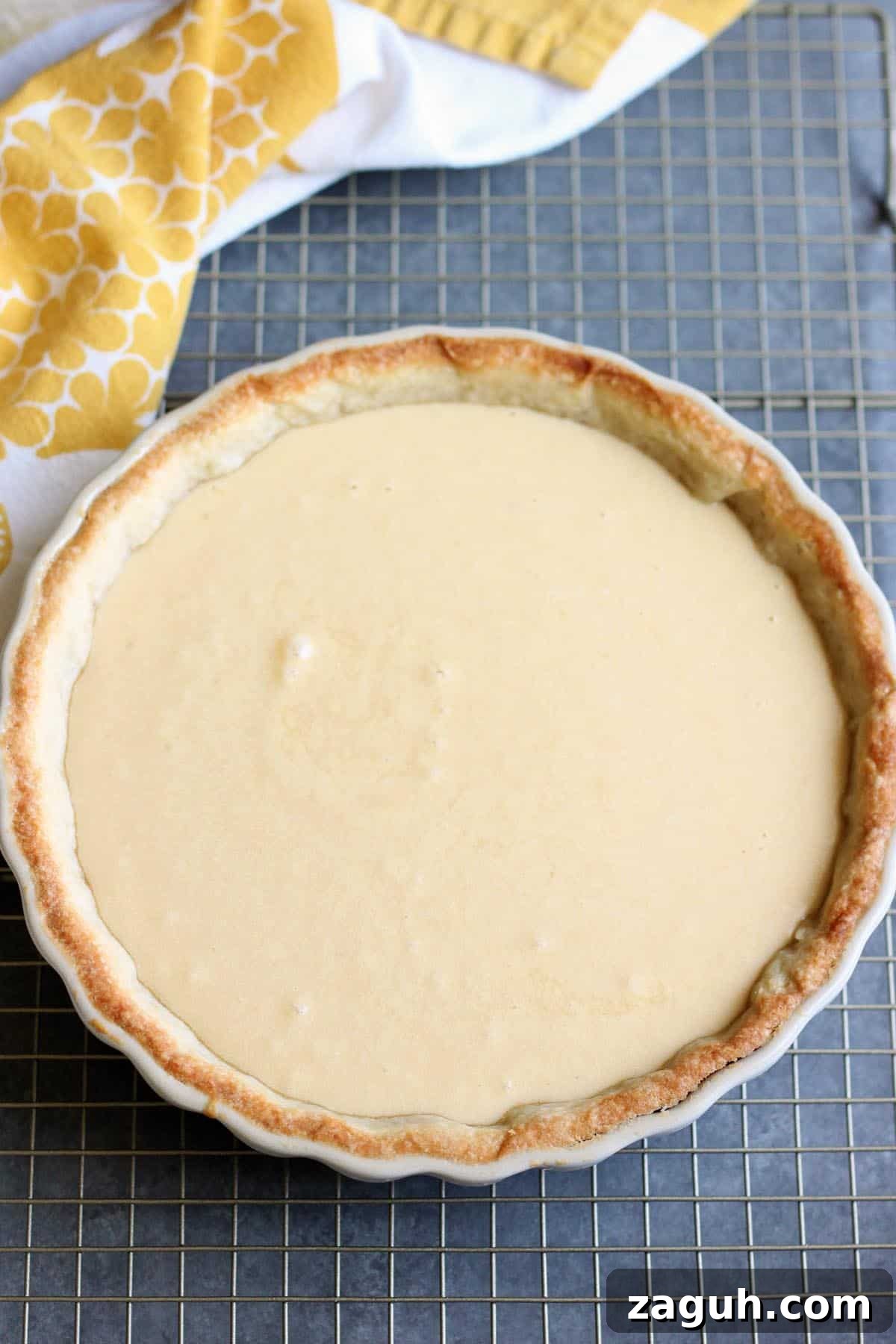
Tip: Scrape the sides of the bowl while mixing so all butter is fully incorporated for a smooth filling.
Assemble and bake
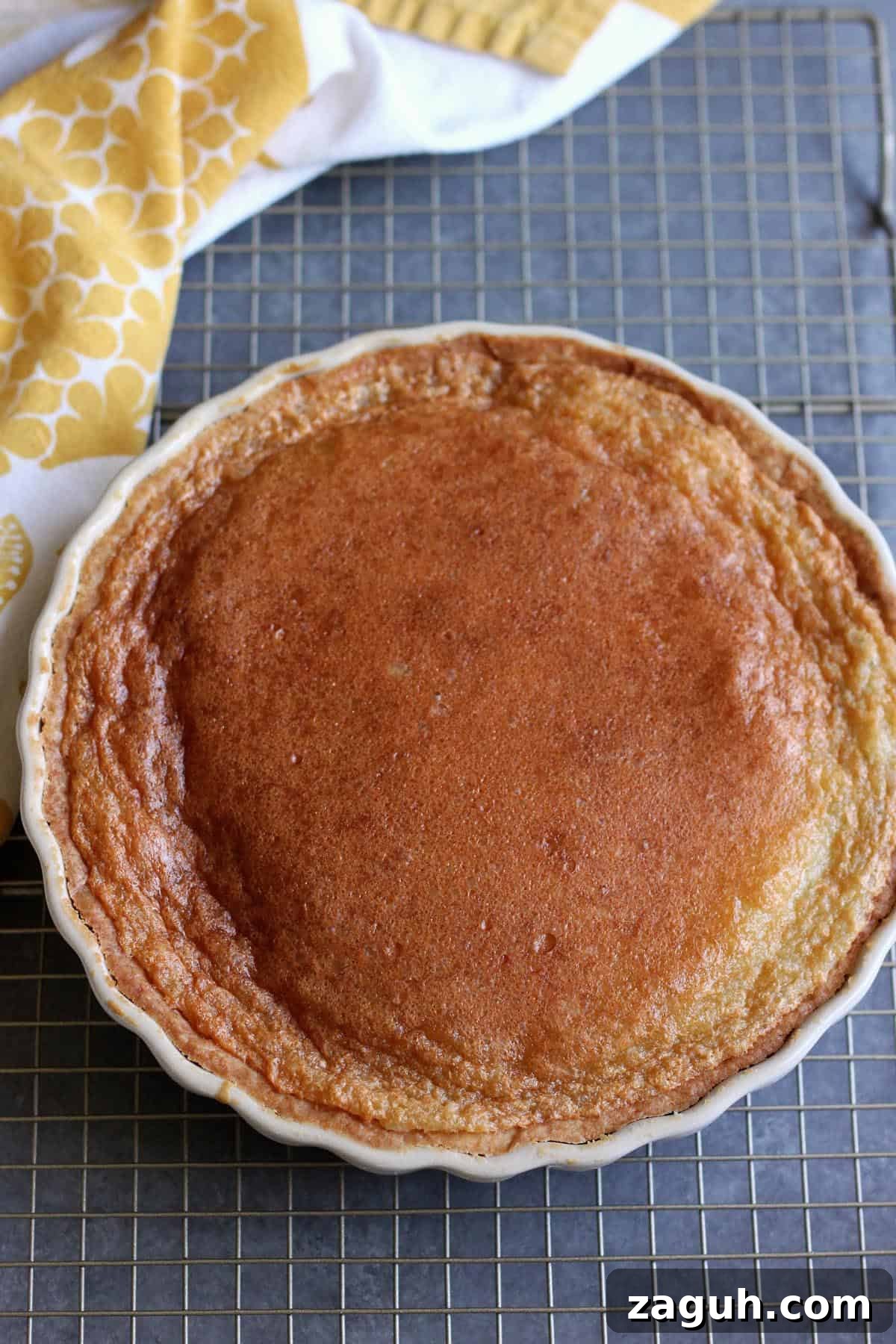
Pour the custard into the par-baked crust and cover the crust edge with foil to prevent over-browning. Bake at 350°F (177°C) until the filling is set but still slightly jiggly in the center, about 40–50 minutes depending on your oven. Remove foil for the last few minutes if you want more color on the crust edge. Cool completely on a wire rack before serving.
Baker’s tips
- Par-bake the crust — prevents sogginess and is essential for this type of pie.
- Use a large piece of parchment — so it fully covers the crust and weights, protecting edges from burning.
- Cover the crust edge while baking — foil shields the edge from over-browning; remove near the end if you want more color.
- Use a baking sheet — place the tart pan on a baking sheet for easier handling in and out of the oven.
- Expect some sinking — custard puffs up while baking and will settle as it cools; this is normal.
Storage
Cool completely before storing in an airtight container. Refrigerated leftovers will keep 3–4 days. Serve chilled or gently warm slices in a low oven (about 300°F / 150°C) for 5–10 minutes to refresh texture. Freezing individual well-wrapped slices is possible for up to 3 months, though texture can change slightly after thawing.
FAQs
Custard pie is baked with an egg-based filling that sets in the oven. Cream pie usually has a pre-cooked filling that is poured into a pre-baked crust and chilled to set.
Crust shrinkage usually comes from overworking the dough or insufficient chilling. Keep the dough cold and allow it to rest after shaping to minimize shrinkage.
Avoid overbaking; remove the pie when the center still jiggles slightly and let it cool gradually. Overcooking is the most common cause of cracks.
More creamy pies
- Purple Sweet Potato Pie
- Cream Cheese Pumpkin Pie
- Biscoff Pie (no bake)
- No Bake Banana Cream Pie
- French Silk Pie
Hungry for more?
Join the newsletter for weekly recipes, inspiration, and occasional giveaways via email.
Custard Pie Recipe
Equipment
- 8″ Tart Pan
Ingredients
For the crust:
- 1 ¼ cup all-purpose flour (169 g)
- 2 tbsp granulated sugar (23 g)
- ¼ tsp kosher salt
- 4 oz unsalted butter, cold and cubed (113 g)
- 3 tbsp cold water
- Extra flour for rolling
For the filling:
- 4 oz unsalted butter, room temperature (113 g)
- 1 cup granulated sugar (190 g)
- ¼ tsp kosher salt
- 4 large eggs, room temperature
- ¼ cup heavy cream, room temperature (60 g)
- 2 tsp pure vanilla extract
- 1 tbsp all-purpose flour
Instructions
- Prepare the crust: Whisk flour, sugar, and salt. Add cold cubed butter and pulse or cut in until pieces are pea-sized. Drizzle up to 3 tbsp cold water and pulse until dough begins to come together. Shape into a disk, wrap, and refrigerate 1 hour. Roll to fit an 8″ tart pan, press in, trim excess, cover, and freeze or refrigerate 10–15 minutes.
- Preheat oven to 425°F. Dock the crust, line with parchment, and add pie weights or dry beans. Par-bake 20 minutes, remove weights, then bake 5 minutes more. Cool on a wire rack. Reduce oven to 350°F.
- Prepare the filling: Beat softened butter with sugar and salt until combined. Whisk eggs, heavy cream, and vanilla, then add to butter mixture and beat until smooth, scraping the bowl as needed. Stir in 1 tbsp flour.
- Pour custard into the par-baked crust, cover the crust edge with foil, and bake about 45 minutes or until the filling is set but still slightly jiggly in the center. Remove foil and bake 3–5 minutes more if you want more browning on the edge.
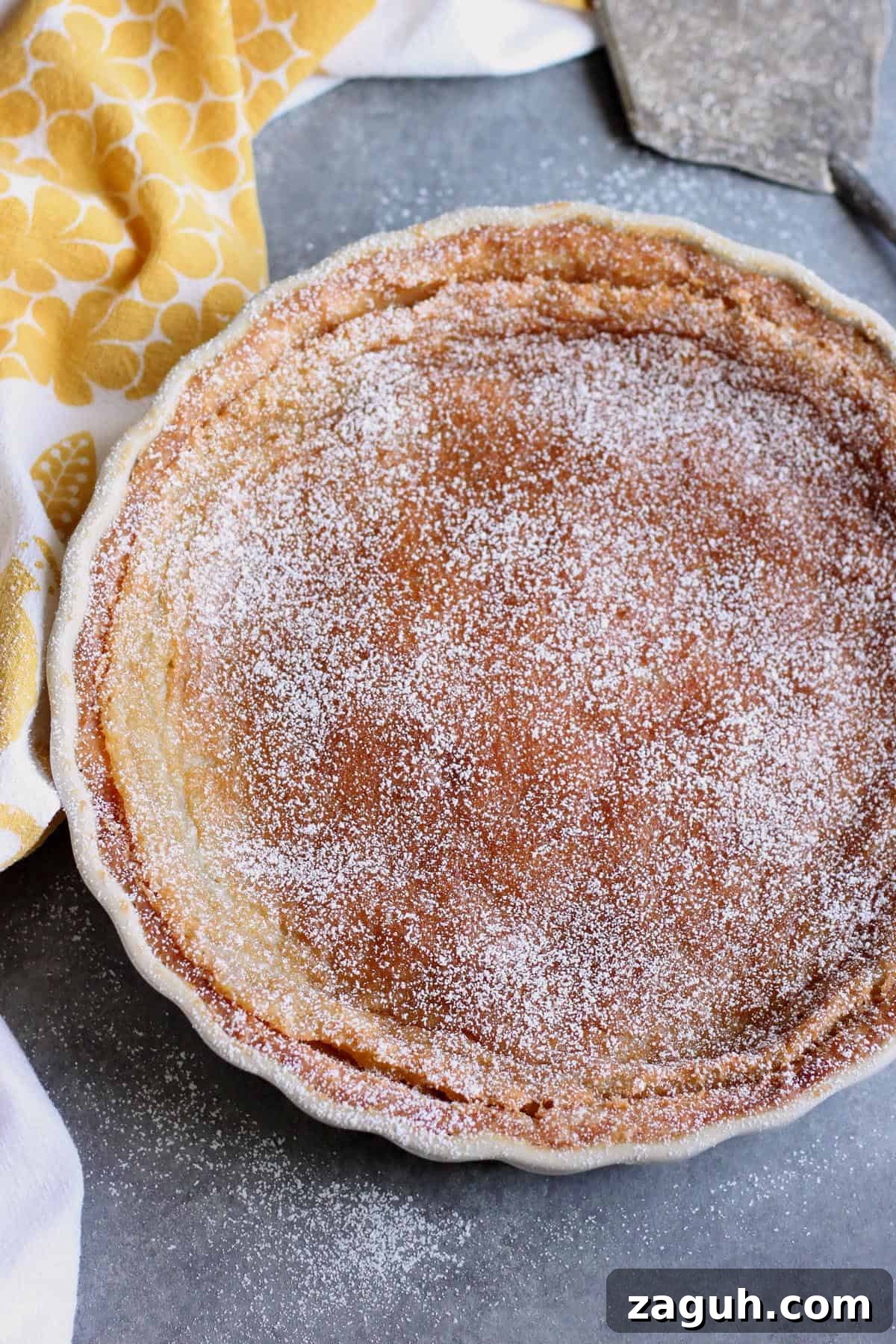
- Cool completely on a wire rack, dust with powdered sugar, and serve with whipped cream and berries if desired.
Notes
- Use a shallow tart pan or shallow pie pan; a deep-dish pan will not be filled properly.
- Bring refrigerated ingredients for the filling to room temperature so they incorporate smoothly.
- The filling will deflate slightly as it cools — this is normal.
Nutrition
Nutrition information is automatically calculated and should be used as an approximation.
 Like this recipe? Rate & comment below!
This post may contain affiliate links. For more details about affiliates, ads, and sponsored content, refer to the site’s disclosure policy. Thank you for your support — it helps us keep sharing recipes at no extra cost to you.