“People who follow all the rules and chase every trend tend to get forgotten
– they look great, but they’re not as memorable.” – Dita Von Teese.
I’m not someone who chases every trend. I rarely know which singer is popular, which app everyone is downloading, or exactly what’s “in fashion.” When it comes to food trends I notice them more, but I tend to observe rather than follow blindly.
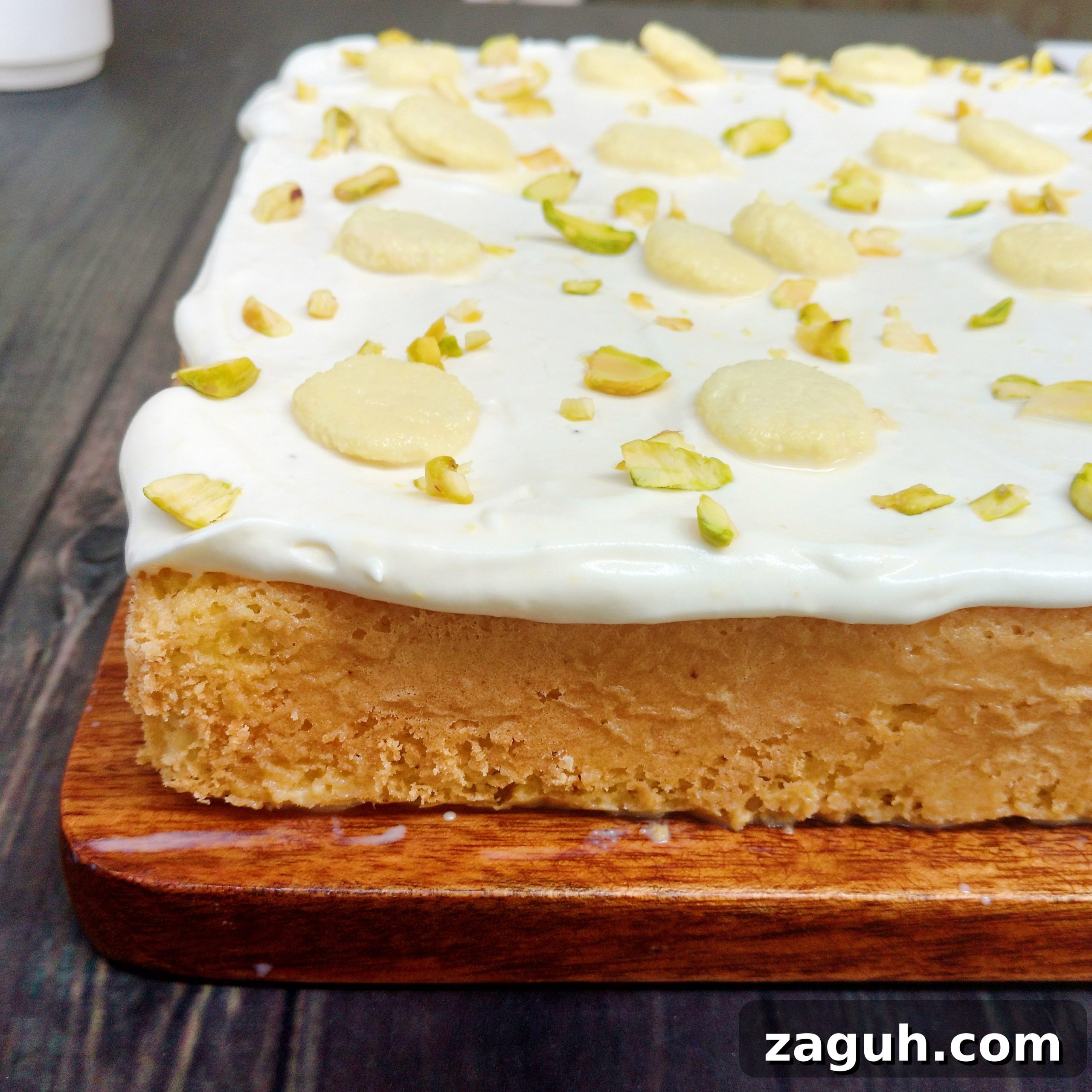
Lately, rasmalai cakes have been appearing all over my feeds. Curious, I decided to try one to see what the fuss was about. Since I’m on a bit of a fusion dessert streak, this felt like the perfect time to hop on the rasmalai-tres-leches bandwagon. Years ago I made a Rasmalai Japanese cheesecake, and while that was fun, this version is much simpler to pull off.
Rasmalai (literally “juice and cream”) is a beloved Indian dessert made from discs of milk cheese (chenna) boiled in sugar syrup and soaked in saffron-flavored, reduced sweetened milk called rabdi. The process takes time and patience, but the result is soft, spongy, and irresistible.
Tres leches (meaning “three milks”) is a classic Latin American sponge cake: an airy cake soaked with a mixture of three milks — typically condensed milk, whole milk, and evaporated milk — and finished with whipped cream. It’s incredibly moist and delicate.
Combining the Indian rasmalai with the Mexican tres leches felt like an obvious and delightful match. The rabdi becomes the dominant soaking milk, complemented by condensed milk and whole milk for the tres leches element. Compared to making a layered rasmalai cake, this is far more straightforward.
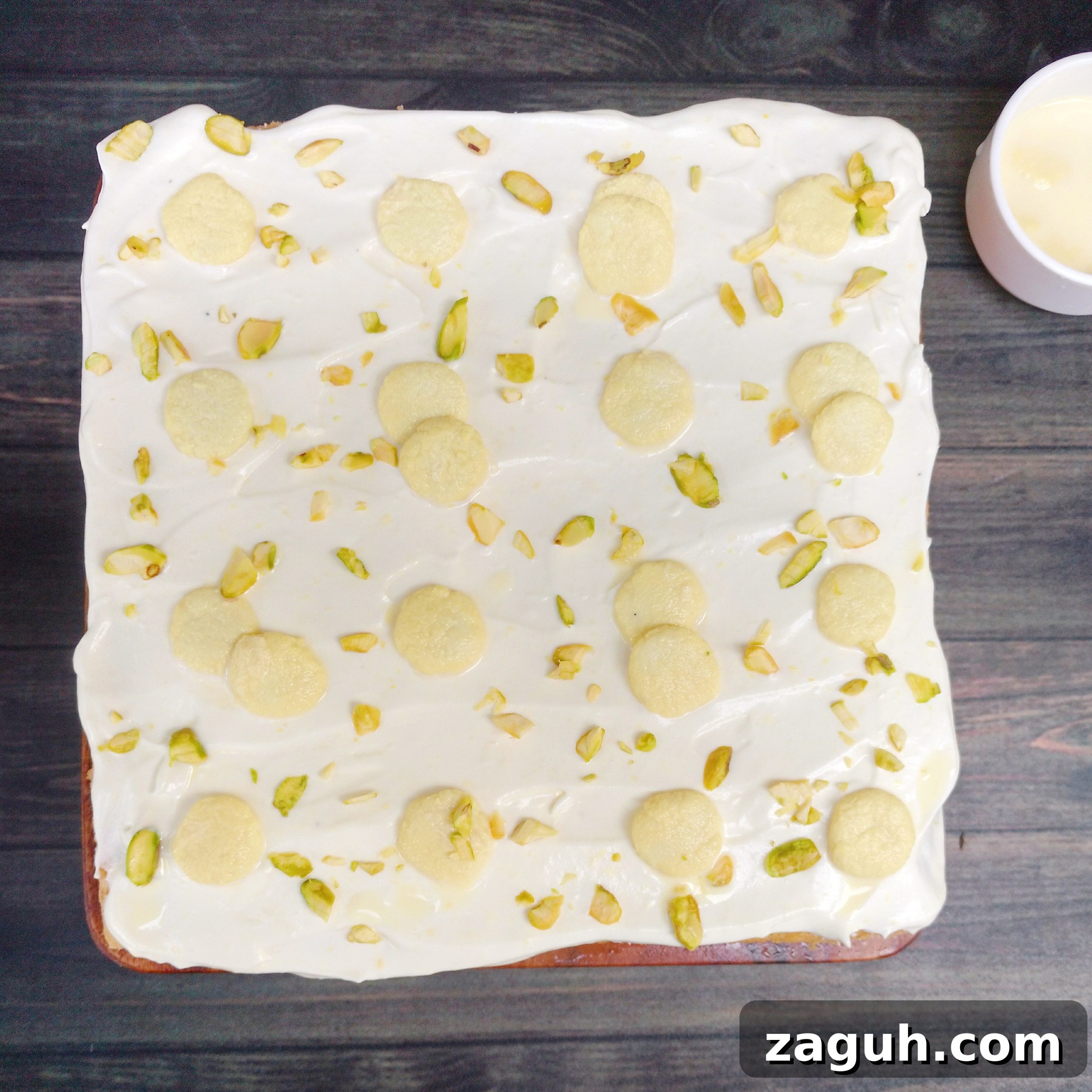
One great thing: you can make this cake even if you skip preparing the rasmalai from scratch. As a food blogger, presentation matters, so I made small rasmalai discs as garnish, but they are optional — the cake still tastes convincingly like rasmalai without them. The rabdi itself is easier to prepare than the cheese discs.
If the ingredient list and steps below look intimidating, don’t be discouraged. It’s simpler than it appears. At Flours and Frostings we like to get delicious results with sensible effort, so here are three practical approaches you can choose from:
- The full-from-scratch version (about two hours): Make the chenna, prepare the sugar syrup, cook the rabdi, make the cake, and soak it. This gives you control over size and texture of the rasmalai — I made tiny button-shaped discs that I found adorable.
- The slightly-lazy but smart version: Buy ready-made rasmalai (often sold with rabdi), bake the cake, and soak. Much less time and effort, but excellent results.
- The easiest version (my preferred lazy-but-intentional approach): Skip homemade rasmalai. Use store-bought rasgullas if desired, make the rabdi, bake the cake, and soak. This allows you to control sweetness more easily.
The recipe below shows the full-from-scratch method, but you can skip or simplify steps depending on the version you prefer. There are a few adjustments compared to making standard rasmalai: you need much less rasmalai and rabdi for a tres leches cake, the rabdi is slightly less sweet since the condensed milk contributes sweetness during soaking, and you don’t need to reduce the rabdi as much as for a standalone rasmalai dessert.
Use as light and airy a sponge as you can — traditional tres leches cakes are relatively shallow and rely on a delicate crumb to absorb the soaking milks. Allow the cake to soak for several hours, or overnight if possible; the texture is completely worth the wait.
Rasmalai tres leches cake
Ingredients
For the rasmalai
- 120 ml (1/2 cup) milk
- 1 tablespoon lemon juice
For the sugar syrup
- 50 grams (1/4 cup) sugar
- 240 ml (1 cup) water
For the rabdi
- 360 ml (1½ cups) milk
- 3-4 tablespoons sugar
- 1/4 teaspoon saffron threads
- 1/4 teaspoon powdered cardamom
For the soaking milks
- 120 ml (1/2 cup) rabdi homemade or store-bought
- 60 ml (1/4 cup) sweetened condensed milk
- 60 ml (1/4 cup) milk
For the cake
- 4 eggs at room temperature
- 100 grams (1/2 cup) caster or granulated sugar
- 125 grams (1 cup) all-purpose flour
- 1 tsp baking powder
For the topping
- 120 ml (1/2 cup) whipping or heavy cream
- 1-2 tablespoons sugar
- 1-2 tablespoons rabdi from the rabdi used to soak the rasmalai
- Pinch cardamom optional
- Pinch saffron optional
- Sliced almonds or pistachios
Instructions
To make rabdi
- Bring one cup of milk to a boil in a thick-bottomed pan.
- Lower the heat and simmer, stirring occasionally.
- After about 10 minutes, add the sugar, saffron, and cardamom powder.
- Continue simmering for 5–10 minutes until you have about 3/4 cup of liquid.
- Remove from heat and let cool.
To make the rasmalai
- Bring the 1/2 cup milk to a boil and add lemon juice while stirring to curdle.
- When the milk has curdled, pour into a strainer lined with cheesecloth or muslin.
- Rinse the cheese under water to remove any lemon residue.
- Wrap the cheese in the cloth, squeeze out excess water, and hang or rest for about 30 minutes.
- Knead the cheese for about 10 minutes until it forms a smooth, pliable dough.
- Divide into small, crack-free balls (I made about 20).
- Heat 1 cup water with 1/4 cup sugar in a wide pan until it reaches a rolling boil.
- Gently add the cheese balls to the boiling syrup.
- Cover and cook on high heat for 8–10 minutes; the balls should double in size.
- Remove the discs with a slotted spoon and soak them in 1/4 cup of the prepared rabdi. Refrigerate for a few hours or overnight.
To make the cake
- Preheat oven to 180°C (350°F). Butter and flour an 8-inch square pan and line the bottom with parchment.
- Separate the eggs.
- Whisk together the flour and baking powder and set aside.
- Beat the egg whites until stiff peaks form, about 2–3 minutes with an electric mixer.
- Add the yolks gradually while continuing to beat.
- Add the sugar one tablespoon at a time while beating, then continue beating briefly after the last addition.
- Sift the flour-baking powder mixture over the batter and gently fold in with a spatula until no dry flour remains.
- Pour the batter into the prepared pan and smooth the top.
- Bake for 25–30 minutes at 180°C (350°F), until the cake springs back when touched and the edges pull away from the pan.
- Cool in the pan for 10 minutes, then remove and cool completely on a wire rack.
To assemble
- Stir the remaining 1/2 cup of rabdi with the condensed milk and whole milk.
- Pour the milk mixture evenly over the cooled cake.
- Refrigerate for a few hours or overnight to allow the cake to absorb the milks.
- Whip the 1/2 cup heavy cream with 1 tablespoon sugar to firm peaks.
- Add 1–2 tablespoons of the rabdi used to soak the rasmalai (add gradually, a little at a time) and beat to incorporate. Optionally flavor with saffron or cardamom.
- Spread the whipped cream over the soaked cake.
- Garnish with the rasmalai discs and sliced nuts.
- Serve chilled or at room temperature.
Notes
The finished cake keeps refrigerated for 2–3 days. If using store-bought rabdi, reduce the amount of condensed milk so the soaking liquid isn’t overly sweet. When flavoring the whipped cream, add rabdi slowly (half tablespoon at a time) and beat after each addition so the cream stays firm. If the cream doesn’t get a pale yellow color from rabdi alone, add a pinch of saffron soaked in a little warm milk. If using store-bought rasgulla, squeeze out excess syrup, let them soak in rabdi, and proceed as above.
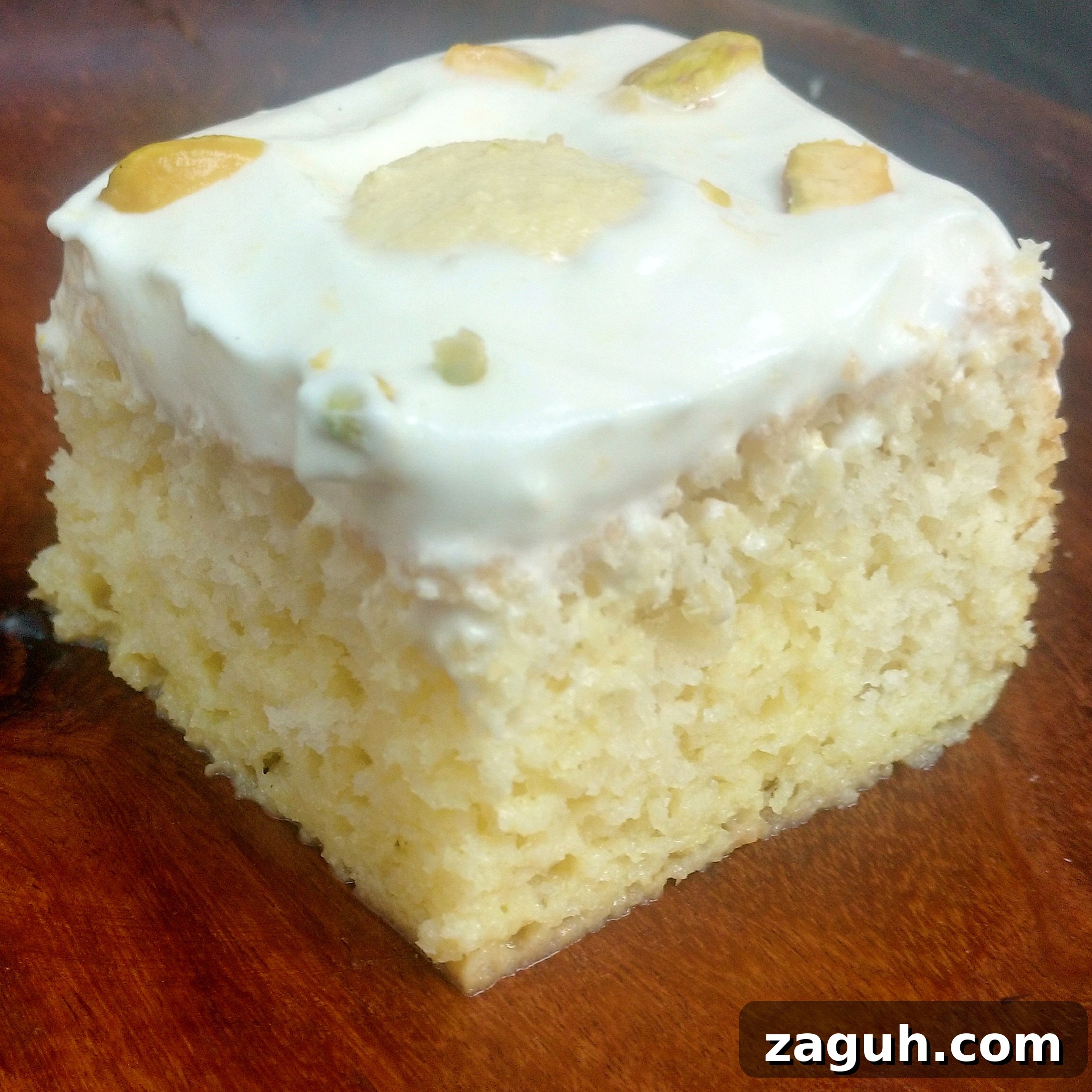
I’m genuinely proud of this cake. It’s moist—almost juicy—yet still light and refreshing. The flavor is delightful and worth the effort, whether you make everything from scratch or streamline the process. Give it a try; it’s a delicious fusion that brings two beloved desserts together beautifully.