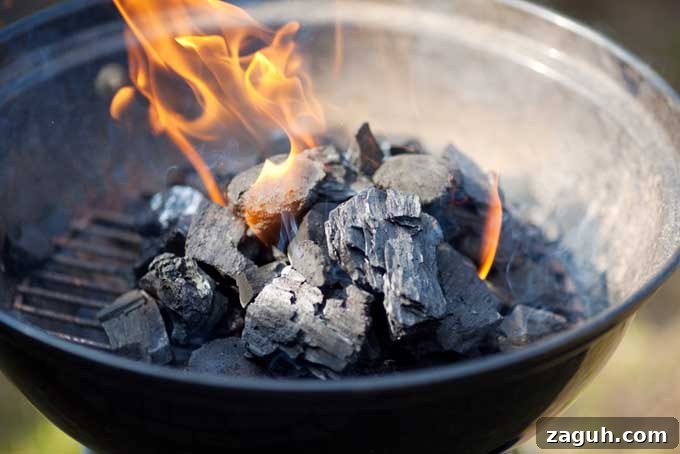
If you didn’t grow up watching a parent grill often, you might not know the basics of preparing great-tasting barbecue—how to arrange coals, judge when the grill is hot enough, or control temperature once it’s set. This guide covers those essentials in simple, practical terms so you can get reliable results on the charcoal grill.
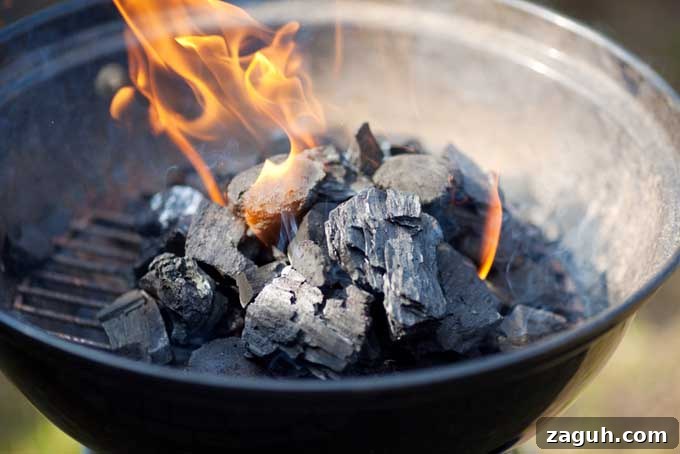
Understanding coal arrangement and heat management makes the difference between overcooked, unevenly done food and perfectly seared, juicy results. Below are the most useful charcoal layouts and how to use them for different cuts and cooking techniques.
How to Arrange Your Coals
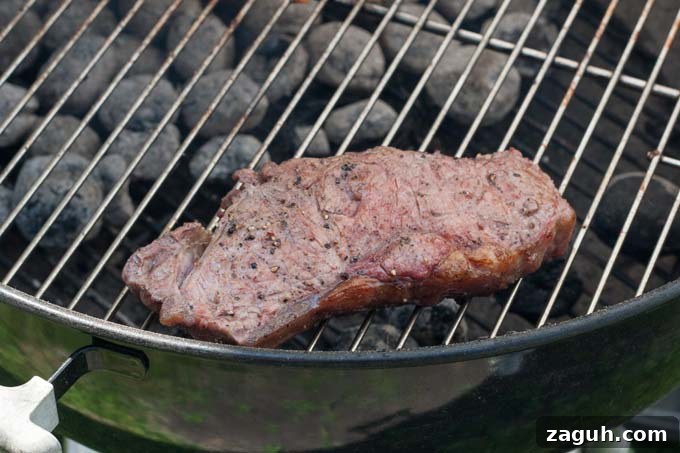
There are several effective ways to arrange charcoal, and each layout supports a different grilling method. The simplest and most common is spreading the coals in a single, even layer across the charcoal grate. This setup produces consistent direct heat and is ideal for searing steaks, cooking burgers, and other foods that benefit from high, even heat.
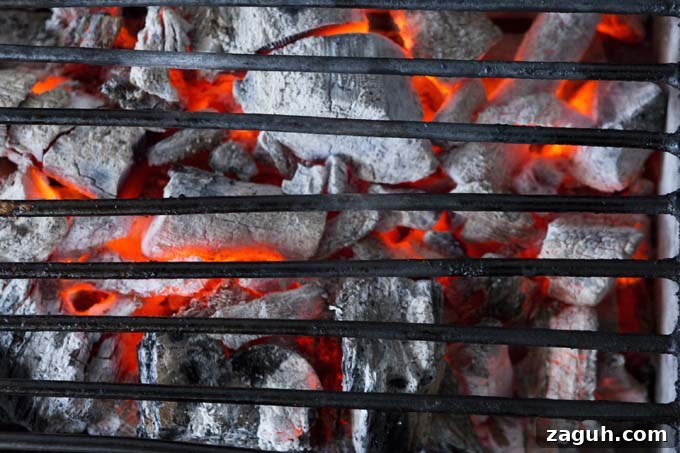
A common variation is a two-zone direct-heat layout: pile most of the coals on one side of the grill while leaving a thin layer (or no coals) on the other. This gives you a hot side for searing and a cooler side for finishing. Use this when cooking thick steaks, large pork chops, or other cuts that need an initial high-heat sear followed by gentler cooking to reach the desired doneness without burning the exterior.
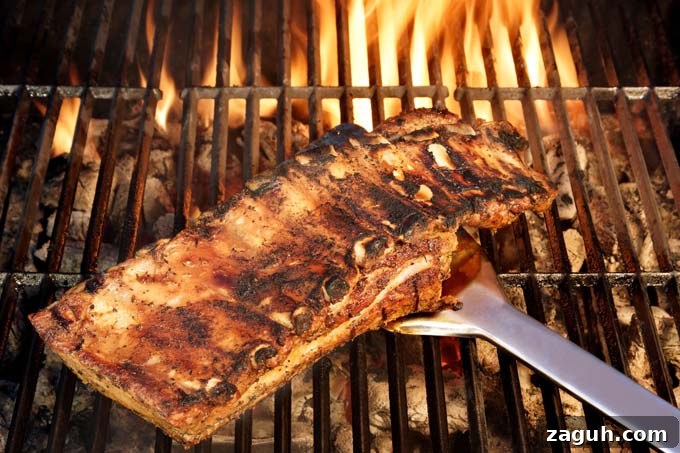
For larger roasts or whole birds, use a two-zone indirect heat arrangement: bank all the fuel on one side and cook the meat on the opposite side where there are no coals directly underneath. This method allows the heat to circulate around the meat and cook it through without burning the exterior, especially when used with a lid or cover to trap and circulate heat.
You can also create a three-zone fire by arranging coals along both sides and leaving the center clear. This gives you a hot zone on each flank and a cooler middle zone, which works well for smaller roasts, pork loins, quail, or small chickens—foods that benefit from a combination of searing and a more moderated finish.
A Note on Portable Charcoal Grills
When selecting a portable charcoal grill, make sure it has enough space and a deep enough charcoal well to let you arrange coals properly. Shallow wells make it difficult to build distinct heat zones and limit flexibility for different cooking methods.
Is It Hot Enough Yet?
After arranging the coals and getting the fire going, you need a quick way to estimate grill temperature. A reliable, low-tech method is the hand test: hold your hand about 4–5 inches above the grill grates and count how many seconds you can keep it there before it feels too hot to hold.
If you can hold your hand only 1–2 seconds, the surface is extremely hot—too intense for most foods but perfect for searing and for heating up and cleaning grill grates with a brush and oven mitt.
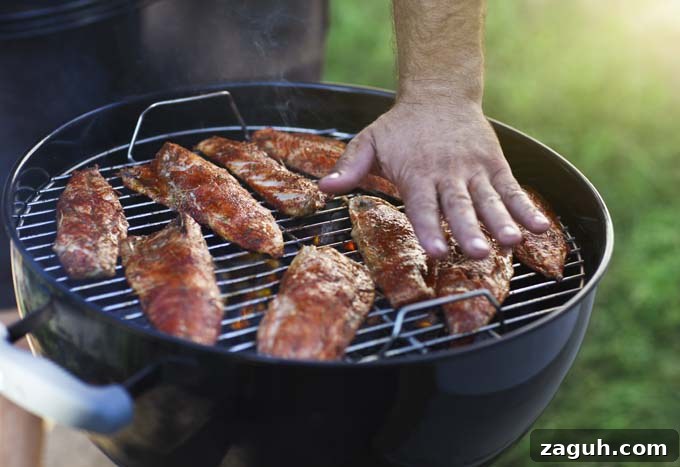
Holding your hand for 2–3 seconds corresponds to very high heat—around 450°F—suitable only for very thin cuts or quick sears. If you can hold it for 4–5 seconds, the heat is roughly medium-high (about 375–450°F), which is ideal for burgers, most steaks, fish, and vegetables.
Keep in mind that open grills cool relatively quickly. A grill can drop from high to medium-high in 5–10 minutes, so have food and tools ready before you light the coals. Once cooking begins, the hottest period typically lasts 10–15 minutes if the grill is left uncovered, so work efficiently to get the best sear and finish.